
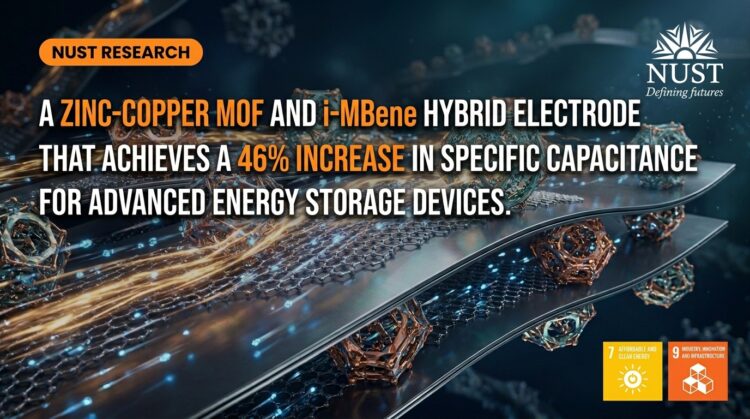
NUST researchers develop a zinc copper MOF and i-MBene hybrid electrode that achieves a 46% increase in specific capacitance for advanced energy storage devices.


Supercapacitors are promising energy storage devices because they can charge and discharge rapidly and offer long operational lifetimes. However, their comparatively low energy density remains a challenge for wider applications. Developing electrode materials that combine efficient charge transport, accessible active sites and long term stability is therefore an important research priority.
A Hybrid Electrode for Enhanced Supercapacitor Performance
Researchers at the National University of Sciences and Technology (NUST) have developed a hybrid electrode that combines a bimetallic metal organic framework with a two dimensional material known as i-MBene, demonstrating improved performance for supercapacitor applications. Published in Small (2026), the study brings together researchers from the Advanced Two dimensional Materials and Devices Laboratory at NUST’s School of Natural Sciences, alongside international collaborators.
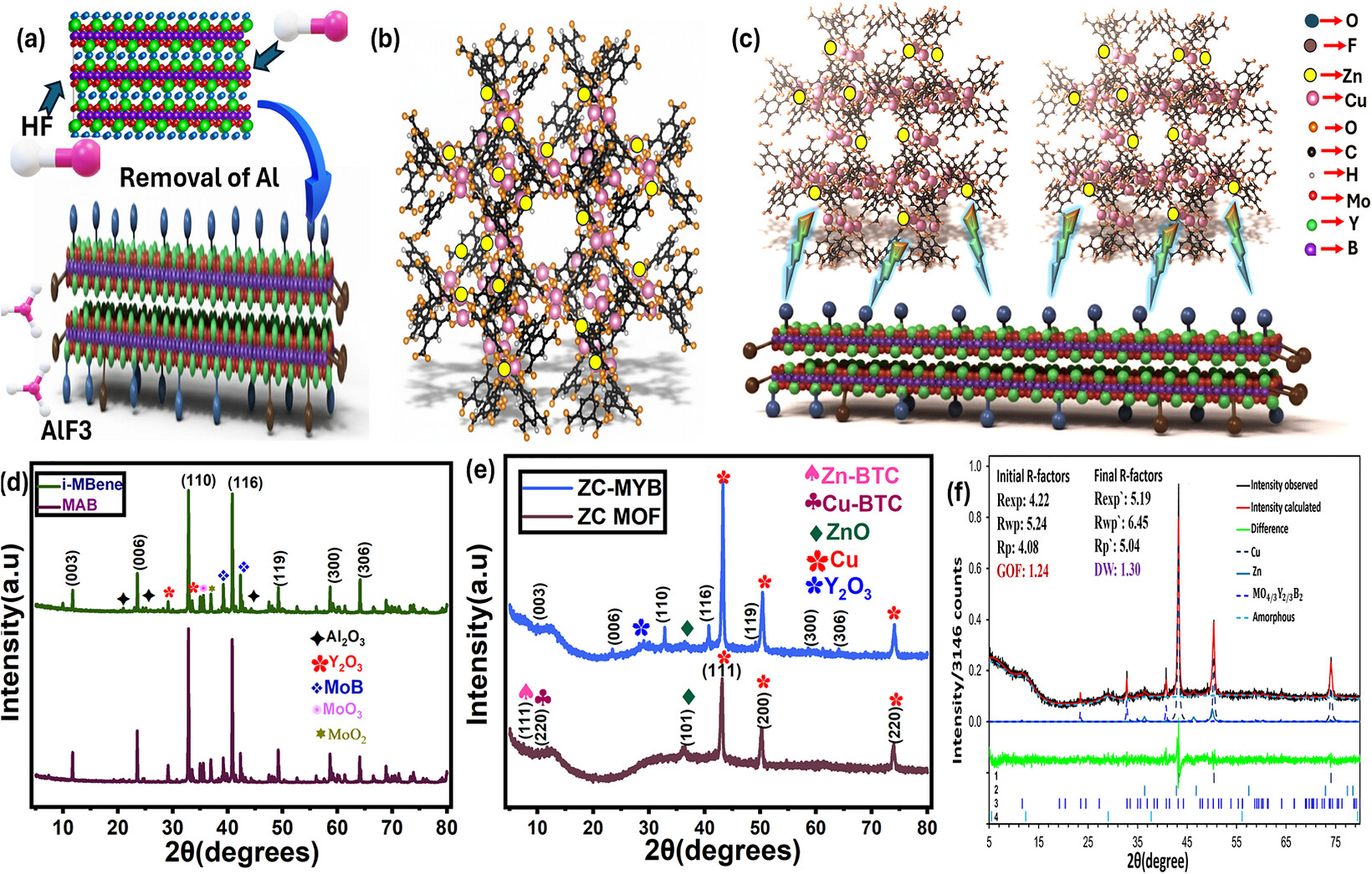
To address this challenge, the team synthesized a bimetallic zinc copper MOF and integrated it with in-plane molybdenum yttrium boride (i-MBene) through an in situ growth process. The resulting composite, designated ZC MYB, combines the porous, redox active structure of the MOF with the conductive two dimensional framework of i-MBene to improve electrical connectivity and facilitate charge storage.
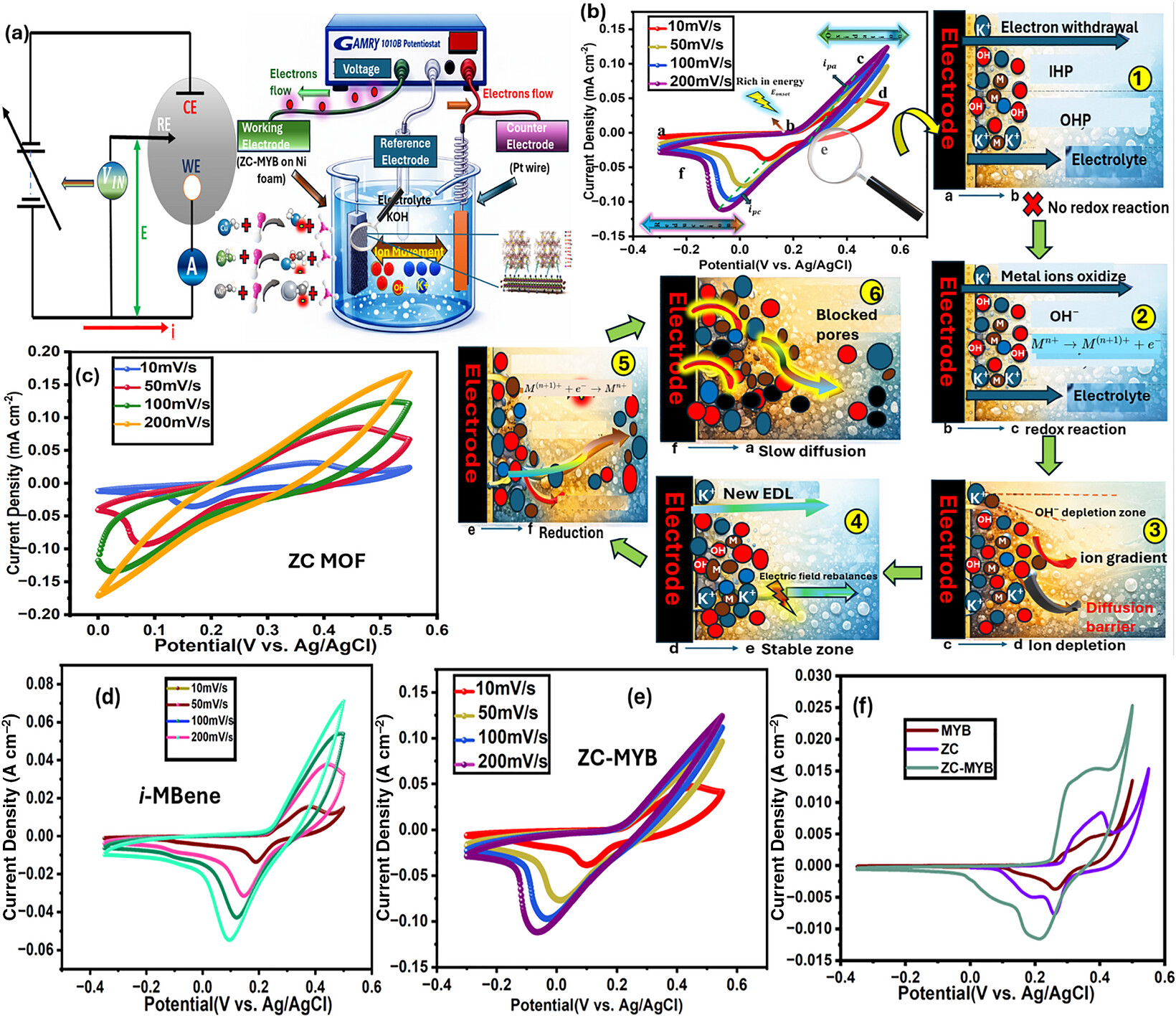
Performance Highlights & Insights
- Capacitance Increase: Achieved a 46% increase in specific capacitance compared with the standalone Zn/Cu MOF and a 5.6-fold improvement over i-MBene at 1 A/g.
- Durability: Retained 81% of cyclic performance after 9,000 charge discharge cycles, demonstrating sustained operational potential.
- Device Configuration: An asymmetric ZC MYB/AC device demonstrated a specific capacitance of 73.4 F/g at 2 mV/s across a 1.6 V voltage window.
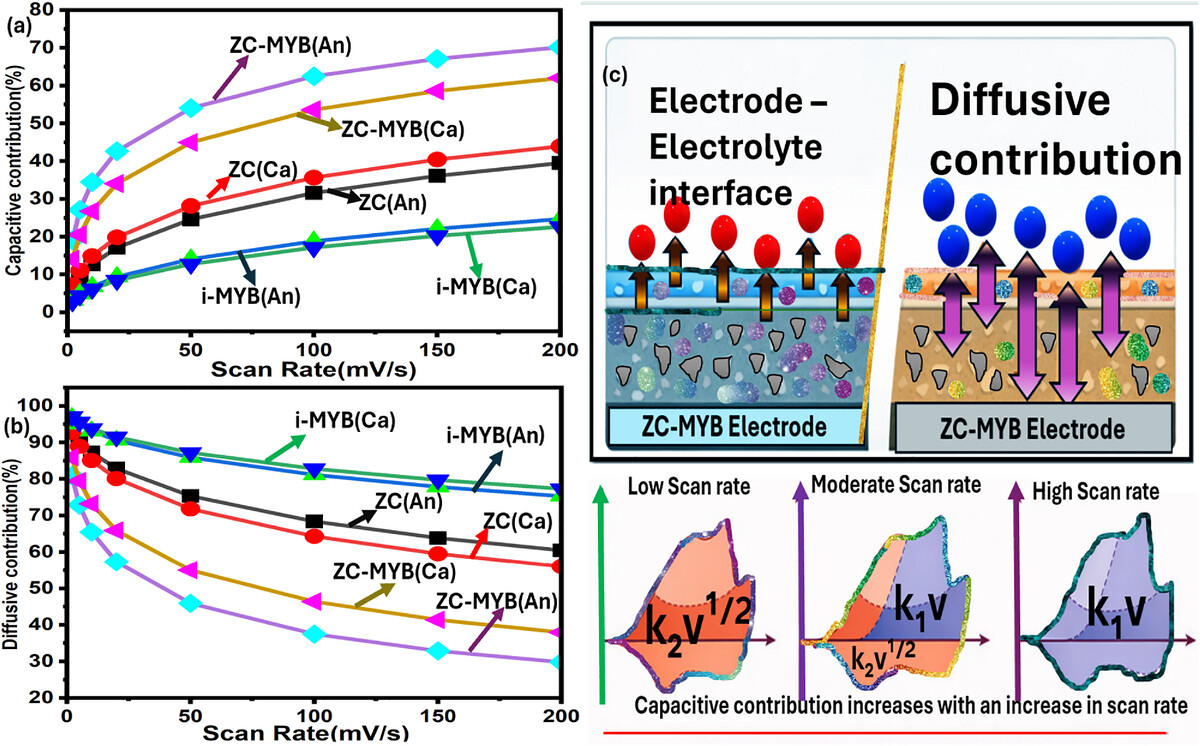
In addition to experimental characterization, the study incorporated machine learning to explore relationships between material characteristics and electrochemical performance. A Random Forest model was trained on 200 experimental observations to guide future experiments and support data driven analysis in advanced energy storage development.
Read the Paper
“Bimetallic Zn/Cu Metal Organic Framework (MOF)/Two Dimensional i-MBene Hybrid Electrodes for Enhanced Supercapacitor Performance,” Small, 2026.
About the Author
Dr. Syed Rizwan Hussain
Professor | HOD, Department of Physics
School of Natural Sciences (SNS), NUST