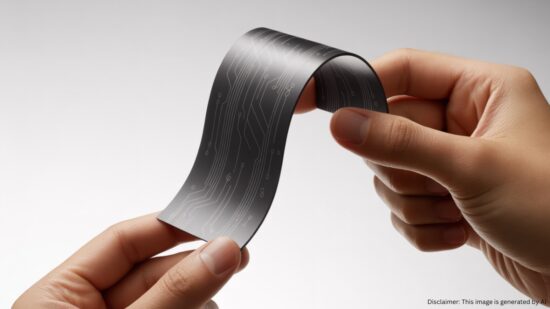
Flexible Carbon Paper-Based Sensor Brings a Sustainable Edge to Human-Machine Interfaces

In an age where digital and physical worlds increasingly converge, Human-Machine Interfaces (HMIs) are becoming central to everyday life—from healthcare and smart homes to wearable technology and robotics. A recent innovation led by researchers from Jeju National University (JNU), South Korea, and National University of Sciences and Technology (NUST), Pakistan, presents a transformative step in…

Loading

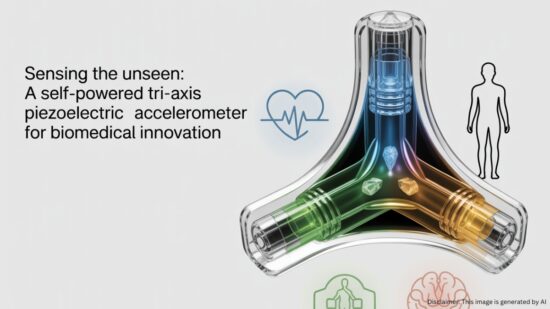
Sensing the Unseen: A Self-Powered Tri-Axis Piezoelectric Accelerometer for Biomedical Innovation

Imagine a world where surgical tools could “feel” the pressure they apply or where wearable devices could monitor movement with surgical precision without needing a power source. At the Department of Mechatronics Engineering, NUST College of EME, Dr. Hassan Elahi and his research team have made a major leap toward this future. Their latest innovation,…

Loading

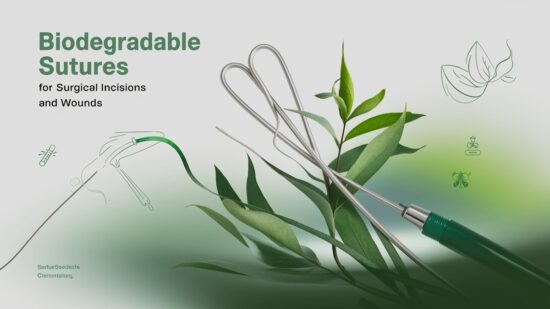
Development of Biodegradable sutures for surgical incisions and wounds

Introduction Surgical site infections (SSIs) are among the most common hospital-acquired infections, posing significant risks to patient health and recovery. SSIs can lead to increased morbidity, prolonged hospital stays, and additional healthcare costs. Given these challenges, the development of antibacterial solutions to reduce the incidence of SSIs is crucial. Project scope Coating on the suture…

Loading

Pakistan’s Mineral Wealth: A Pathway to Economic Growth and Energy Innovation

Pakistan is rich with a wealth of diverse mineral resources, including reserves of metals like copper, iron and gold and non-metallic reserves like marble and gypsum. These are essential resources for various industrial and technological advancements in the twenty-first century. According to recent estimates by geological survey of Pakistan a total value of over $6…

Loading