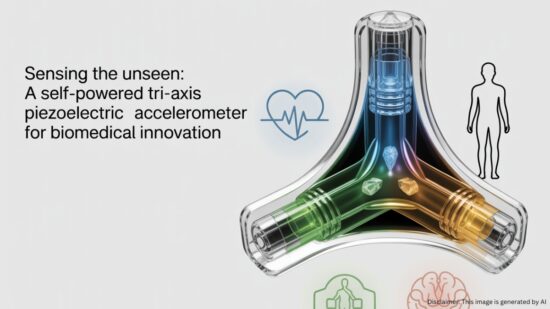
Sensing the Unseen: A Self-Powered Tri-Axis Piezoelectric Accelerometer for Biomedical Innovation

Imagine a world where surgical tools could “feel” the pressure they apply or where wearable devices could monitor movement with surgical precision without needing a power source. At the Department of Mechatronics Engineering, NUST College of EME, Dr. Hassan Elahi and his research team have made a major leap toward this future. Their latest innovation,…

Loading

Testing Tablets: A Cost effective testing for Alkaloids detection in Herbal Samples

For millions of people across Pakistan, herbal medicines are not just supplements — they are trusted remedies, passed down through generations and relied upon daily for healing. From roadside dispensaries to household kitchen shelves, plant-based treatments remain the first line of care for countless communities where modern healthcare is distant. But behind this deep cultural…

Loading

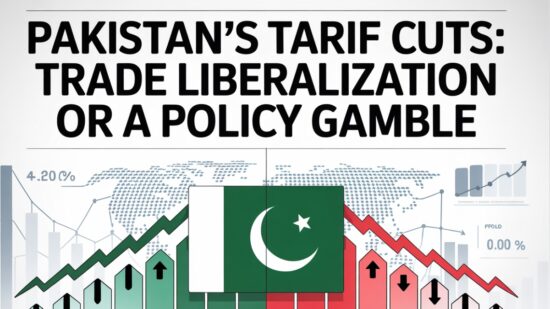
Pakistan’s Tariff Cuts: Trade Liberalization or a Policy Gamble

The Pakistani government in fiscal year budget 2025-26 has decided to initially reduce and eventually eliminate tariffs, or tax on imports, on car imports by 2029 which is currently at 40%. This policy may seem as a step toward rationalising trade and increasing accessibility, but it may as well be the government’s recipe for disaster….

Loading

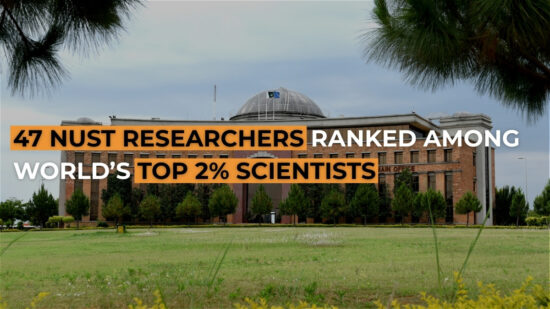
47 NUST researchers ranked among world’s top 2% scientists

An impressive 47 researchers from the National University of Sciences and Technology (NUST), Islamabad, have been recognized among the world’s top 2% scientists for 2025, according to the latest global rankings jointly compiled by Stanford University and Elsevier. The annual list features over 100,000 leading researchers worldwide across multiple disciplines, highlighting those whose scholarly work…

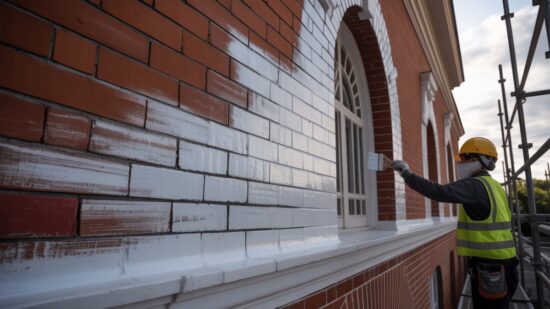
Seismic Strengthening of Heritage Masonry with Fiber-Reinforced Paint

Heritage masonry buildings are among the most vulnerable structures during earthquakes. Their cultural and historical importance makes preserving them a global priority, yet their structural limitations pose serious risks to human safety. Traditional strengthening methods, such as reinforced concrete jacketing or steel bracing, often alter the architectural identity of these buildings, which is not acceptable…

Loading