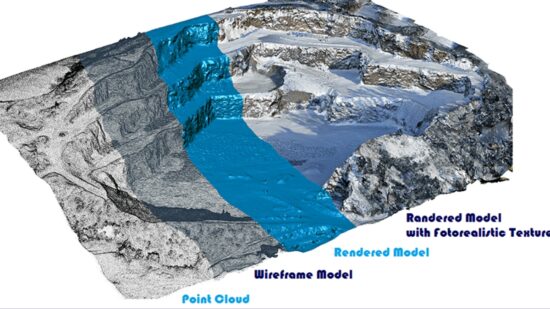
ENHANCING MINERAL RESOURCE UTILIZATION USING AERIAL SURVEYING AND REMOTE SENSING

Mineral Resources, Technologies and Socio-Economic Development: Abundant occurrences of natural mineral resources can’t automatically lead to a country’s prosperity. Many nations, including Pakistan, are endowed with these mineral resources. Still, they struggle to turn these resources into drivers of economic and social progress. One of the key reasons for this is the failure to adopt…


Loading

UBEM-SER: Powering Cities Towards a Low-Carbon Future 

Sufficiency, Efficiency and Renewables – The Pathway to Carbon-neutral Buildings  Step into any bustling city, and you’ll see towering office blocks, shopping malls, hotels, and hospitals. While they serve our daily needs, these commercial buildings also consume massive amounts of energy, often making up over 40% of a city’s electricity demand.  With global climate change…

Loading

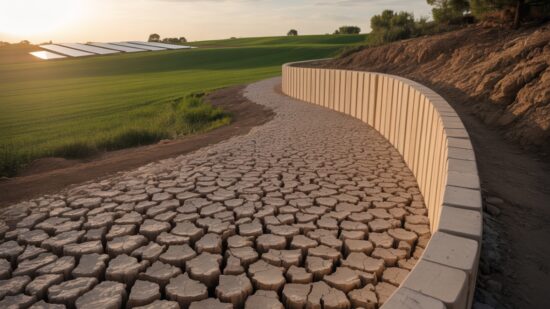
Mitigating Seasonal Soil Desiccation Cracking: Building Climate-Resilient Infrastructure 

Summary/Blog: Clays contain hydrophilic minerals like montmorillonite and illite, which significantly influence their geotechnical behavior. These minerals cause substantial volume changes in response to moisture fluctuations, leading to swelling, shrinkage, and potential structural damage. During desiccation, the tensile stresses within the soil can exceed its strength, resulting in cracking. This phenomenon is particularly relevant in…

Loading

Jamming the Adversarial Nodes in a Battlefield

In modern warfare, reliable communication networks are vital, but they can be crippled by targeted jamming of critical nodes. Our system called jamBIT, uses AI and deep reinforcement learning to identify and disrupt these critical nodes in real time.  a. Background In the age of digital warfare, the side that controls communication often controls the…

Loading