
NUST researchers introduce a risk-assessment framework that integrates climate variability, financing and tariff structures to support more resilient utility-scale solar power investments in Pakistan.


As countries expand their renewable energy capacity, ensuring the long-term financial and technical viability of solar power projects remains a critical challenge. While solar photovoltaic (PV) systems offer significant potential for clean energy generation, their performance is influenced by changing weather conditions, investment costs, financing arrangements and electricity tariff structures. These uncertainties can affect project returns and make investment decisions particularly challenging in developing energy markets.
A Probabilistic Framework for Solar Risk Assessment
Addressing this challenge, Momina Ahmad and Dr. Muhammad Zeeshan from the Institute of Environmental Sciences and Engineering (IESE), School of Civil and Environmental Engineering (SCEE), NUST, have developed a probabilistic framework to assess and manage the interconnected techno economic, financial and climate risks associated with utility scale solar PV deployment. Published in Applied Energy (2026), the study uses Pakistan as a case study to examine how climate conditions, tariff structures and financing arrangements influence project feasibility.
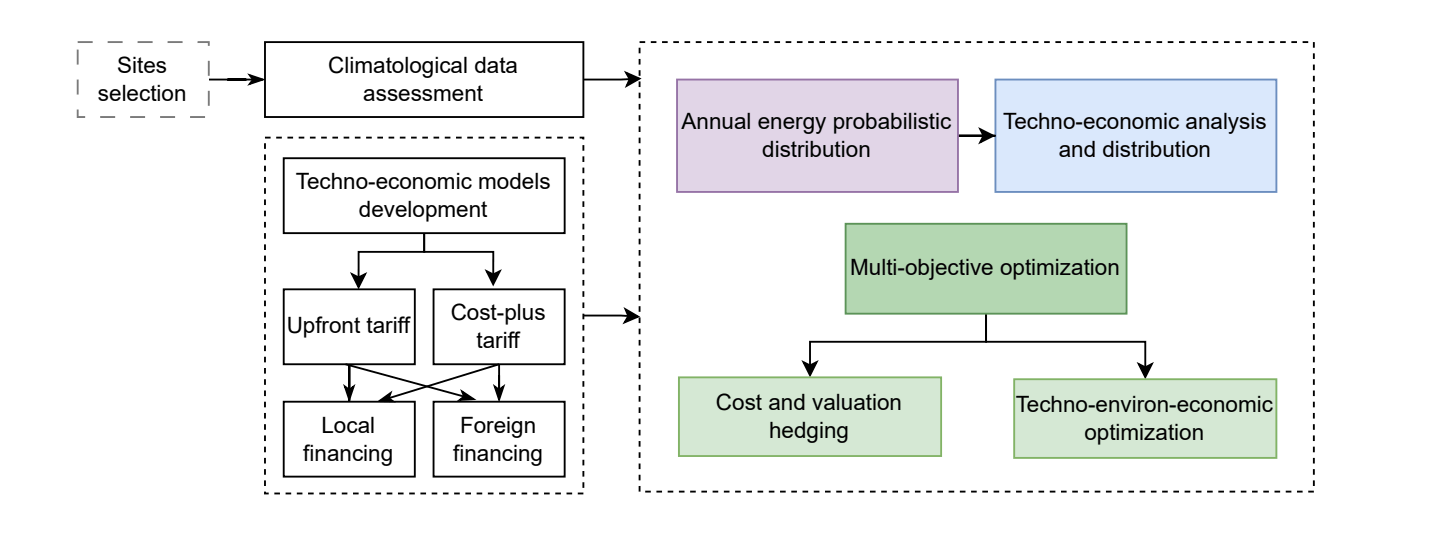
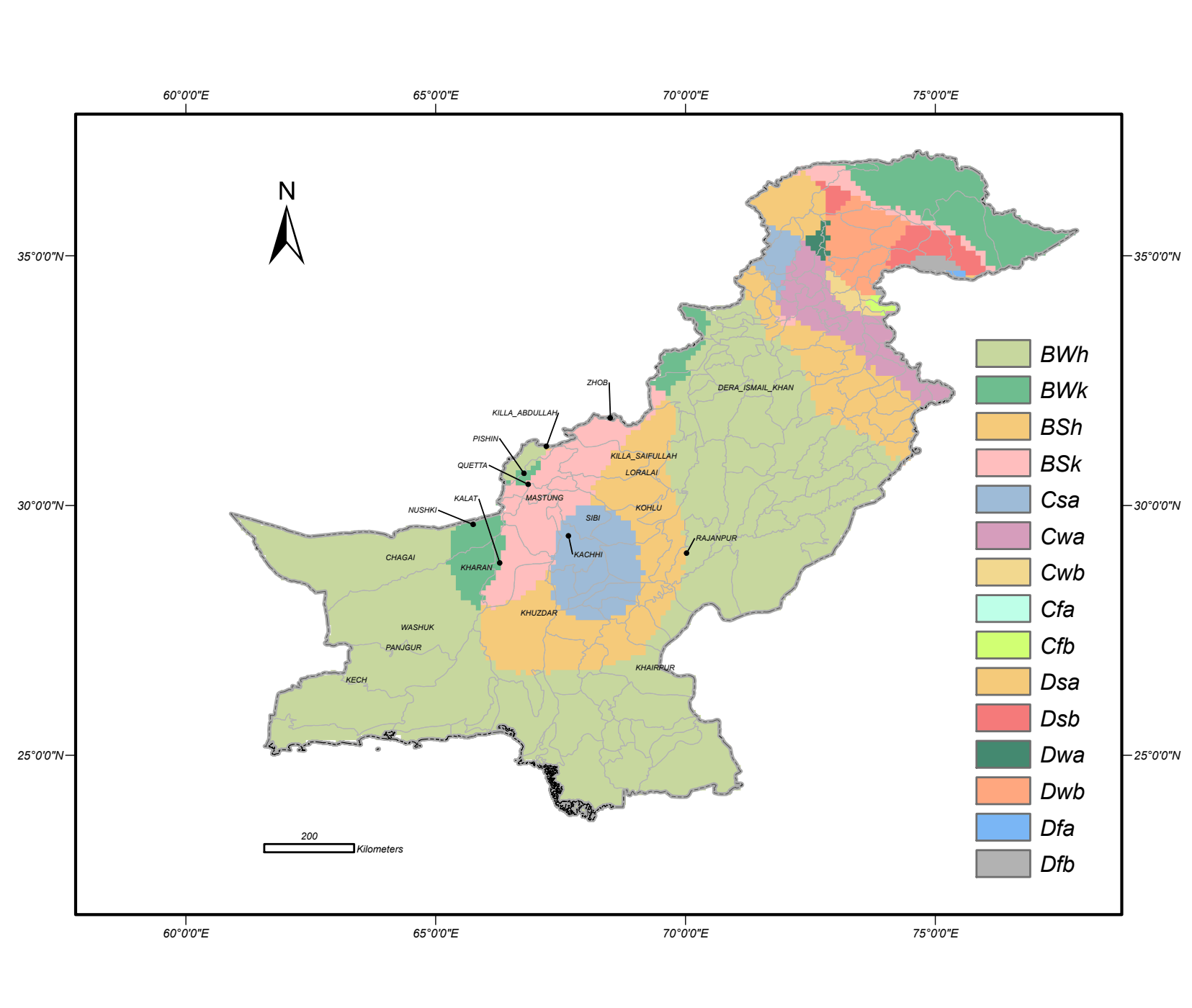
The study analyses five locations representing distinct climatic zones: Dera Ismail Khan, Kharan, Khuzdar, Quetta and Sibbi. Using 24 years of hourly meteorological data (2000 to 2023), the researchers modelled solar energy generation under different weather conditions and assessed its implications for project costs and financial returns. The framework considers two tariff structures (upfront and cost-plus) and two financing arrangements (local and foreign) while applying stochastic simulations and multi-objective optimisation to evaluate project performance under uncertainty.
Key Findings & Insights
- Climate Variability: Meteorological variability is a major source of uncertainty. In Dera Ismail Khan, net present value variation reached 103%, while Quetta exhibited the lowest variability at approximately 27%.
- Tariff Trade-Offs: Cost-plus tariffs provide stronger protection against generation cost fluctuations, whereas upfront tariffs offer better financial value under suitable financing arrangements.
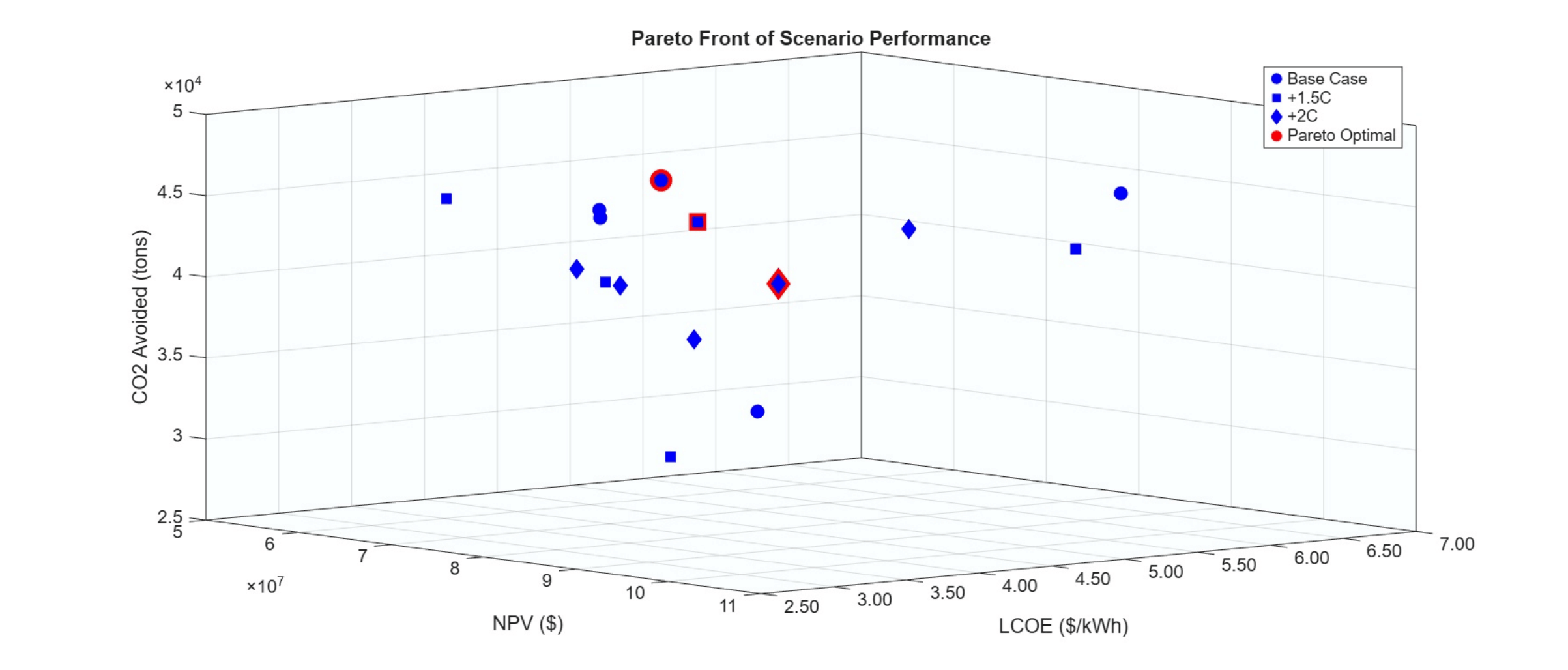
- Optimal Configuration: Quetta under the December 2015 upfront tariff with foreign financing was identified as a Pareto-optimal configuration balancing project value, cost and environmental performance.
By integrating climate variability with economic and financial assessment, this research provides a practical framework for making more informed decisions about large-scale solar investments. Its findings highlight the importance of climate-sensitive tariff design, multi-year resource assessment and risk-informed planning in strengthening renewable energy development, particularly in developing markets.
Read the Paper
Momina Ahmad, Muhammad Zeeshan, “Hedging techno-economic, financial, and climate risks in utility-scale photovoltaic deployment across different tariff-climate synergies,” Applied Energy, 2026.
About the Author
Momina Ahmad
Lecturer, Institute of Environmental Sciences & Engineering (IESE)
Department of Environmental Engineering, NUST