A New Framework to Protect Solar Investments from Climate and Financial Risks

Research NUST researchers introduce a risk-assessment framework that integrates climate variability, financing and tariff structures to support more resilient utility-scale solar power investments in Pakistan. As countries expand their renewable energy capacity, ensuring the long-term financial and technical viability of solar power projects remains a critical challenge. While solar photovoltaic (PV) systems offer significant potential…
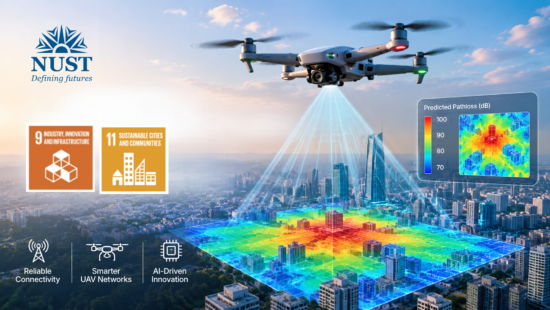
Enhancing UAV Networks Through Multi-Scale U-Net Deep Learning Framework

Research NUST researcher develops a multi scale U-Net deep learning framework that cuts urban millimeter wave signal pathloss prediction error to 3.15 dB for reliable UAV network planning. As unmanned aerial vehicles (UAVs) become increasingly important to next-generation wireless networks, ensuring reliable communication in complex urban environments remains a significant challenge. Buildings, signal obstructions and…

Loading

Fighting Leukemia with Smarter Drug Delivery

Leukemia is a serious blood cancer that begins in the bone marrow, the soft tissue inside bones where blood cells are produced. In this disease, the body starts producing abnormal white blood cells that do not function properly and multiply uncontrollably. These defective cells crowd out healthy blood cells, leading to infections, weakness, bleeding problems,…

Loading

Healing Wounds with Nature Powered 3D Printed Smart Scaffolds

Healing Wounds with Nature and 3D Printing Imagine a wound dressing that doesn’t just cover an injury, but actively helps the body heal—fighting bacteria, supporting new skin growth, and slowly disappearing once its job is done. That future may be closer than we think. Scientists are now blending natural plant materials, traditional herbal medicine, and…

Loading

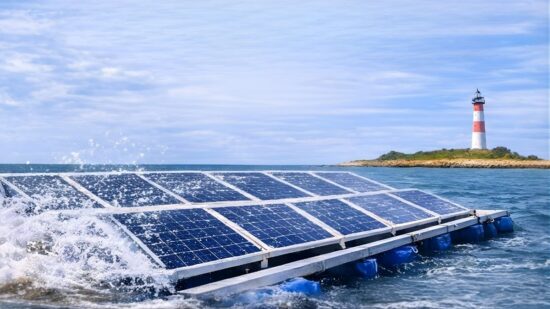
Impact of Salt on Floating Solar Panel Performance in Marine Environments

Background of the Study Renewable energy, Floating Solar Photovoltaic technology is evolving as a sustainable approach to generate clean energy without occupying valuable land resources and at the same time reducing water evaporation. Deploying PV modules on water bodies such as lakes, reservoirs, and near coastal zones, FSPV offers efficiency benefits due to natural cooling,…

Loading