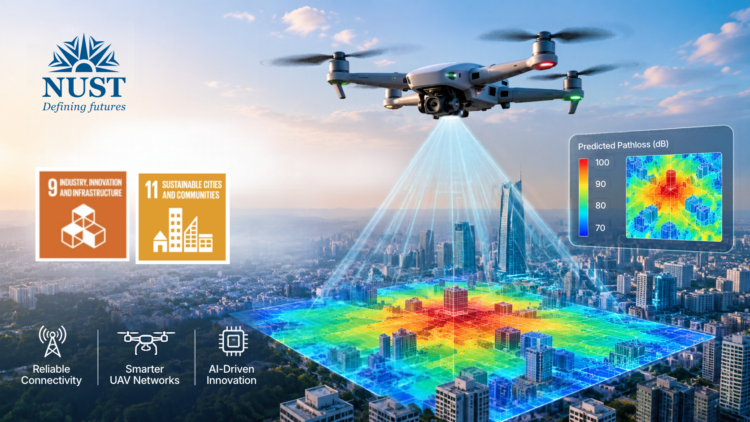
NUST researcher develops a multi scale U-Net deep learning framework that cuts urban millimeter wave signal pathloss prediction error to 3.15 dB for reliable UAV network planning.


As unmanned aerial vehicles (UAVs) become increasingly important to next-generation wireless networks, ensuring reliable communication in complex urban environments remains a significant challenge. Buildings, signal obstructions and varying flight altitudes can affect wireless signal propagation, making accurate coverage prediction essential for effective network planning.
A New Deep Learning Approach for Pathloss Prediction
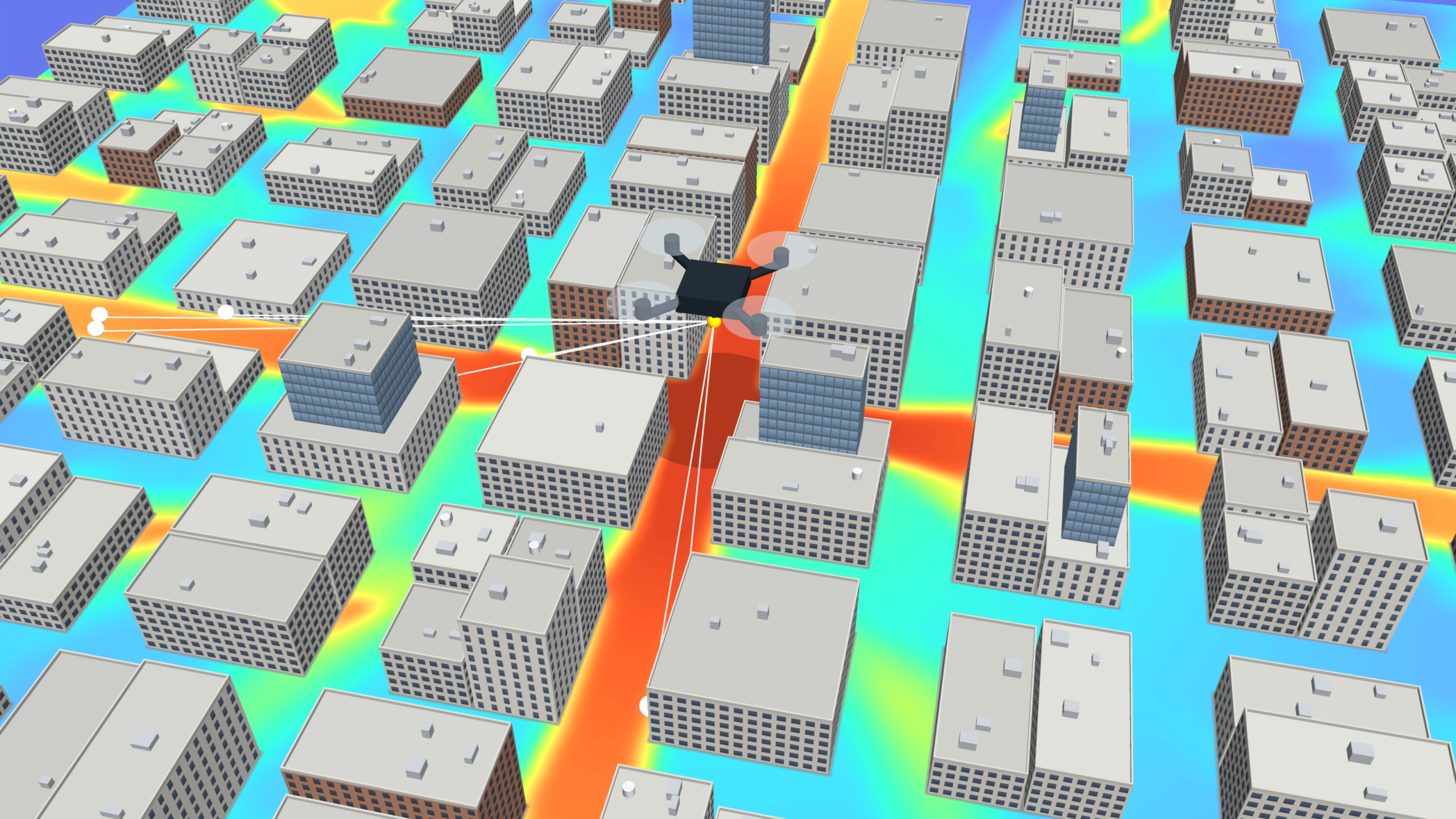
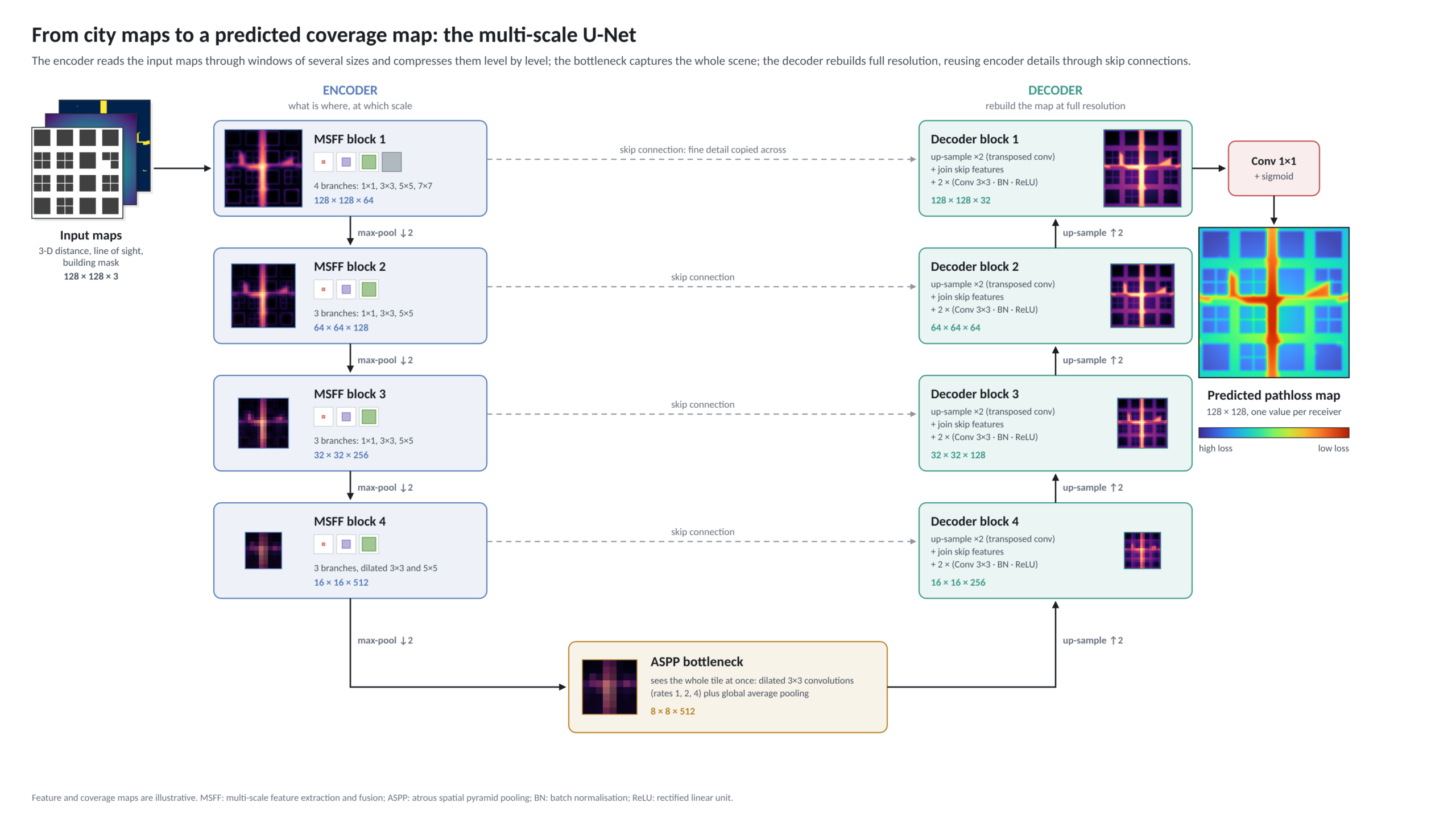
Addressing this challenge, Dr. Sajjad Hussain of the School of Electrical Engineering and Computer Science (SEECS), NUST, has developed a deep learning framework for predicting signal pathloss in UAV assisted millimeter wave communication networks. Published in IEEE Transactions on Wireless Communications (2026), the study introduces a multi scale feature extraction and fusion U Net architecture designed to generate more accurate radio coverage maps.
The proposed model combines information about transmitter distance, line of sight visibility and building locations to predict how wireless signals propagate across urban landscapes. It was evaluated using a purpose built dataset covering five urban locations including Munich, Helsinki, London and Manhattan at a carrier frequency of 28 GHz, as well as the publicly available RadioMapSeer benchmark.
Simulation & Evaluation Highlights
- High Accuracy: Achieved a root mean square error (RMSE) of 3.15 dB on the in house UAV mmWave dataset and 3.97 dB on RadioMapSeer.
- Robust Performance: Demonstrated consistent results across UAV altitudes of 25 to 45 meters.
- Generalization: Proved effective when deployed across previously unseen urban environments.
By improving the accuracy and efficiency of radio propagation prediction, this research offers a promising approach to wireless network planning, particularly for UAV assisted communication systems in complex urban settings. The study also makes its source code and training pipeline publicly available to support reproducibility and further research.
Read the Paper
Sajjad Hussain, “A Multi Scale Feature Extraction and Fusion U Net for Pathloss Prediction in UAV Assisted mmWave Radio Networks,” IEEE Transactions on Wireless Communications, 2026.
About the Author
Dr. Sajjad Hussain
Assistant Professor | HOD, Department of Institute of Telecommunication (IOT-EE)
School of Electrical Engineering and Computer Science (SEECS), NUST