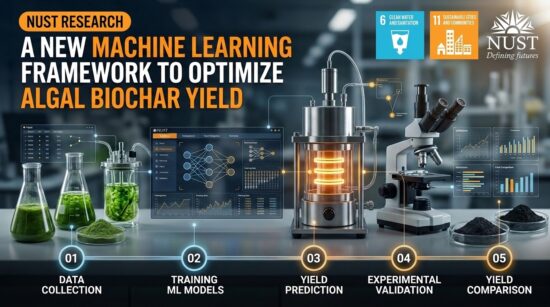
Developing a Machine Learning Framework for Better Biochar Yield

Research NUST researchers develop a machine learning framework for algal biochar yield that reaches 75.42% in lab tests with 1.12% error. Biochar is a carbon rich material produced by heating biomass under oxygen limited conditions, a process known as pyrolysis. It has potential applications in carbon sequestration, soil improvement and renewable energy systems. Algae are…
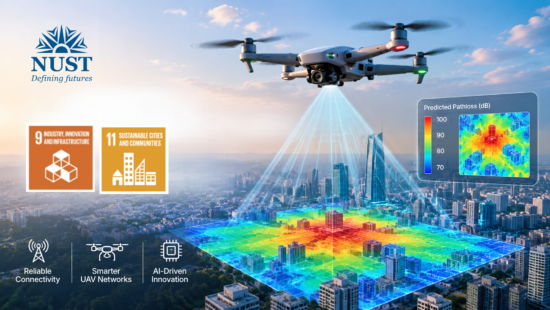
Enhancing UAV Networks Through Multi-Scale U-Net Deep Learning Framework

Research NUST researcher develops a multi scale U-Net deep learning framework that cuts urban millimeter wave signal pathloss prediction error to 3.15 dB for reliable UAV network planning. As unmanned aerial vehicles (UAVs) become increasingly important to next-generation wireless networks, ensuring reliable communication in complex urban environments remains a significant challenge. Buildings, signal obstructions and…

Loading

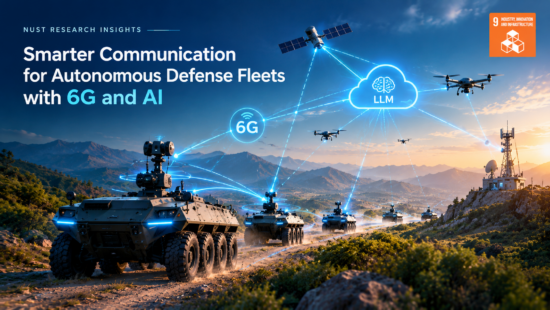
Smarter Communication for Autonomous Defense Fleets with 6G and AI

The 6G–LLM system kept 82.9% of missions successful versus 14.2% for 5G, while cutting latency by 75%. Imagine a convoy of self-driving vehicles moving through contested terrain, where every second of delay matters. Researchers at NUST combined next-generation 6G networks with Large Language Models (LLMs) to help fleets of autonomous defense vehicles share what matters…

Loading

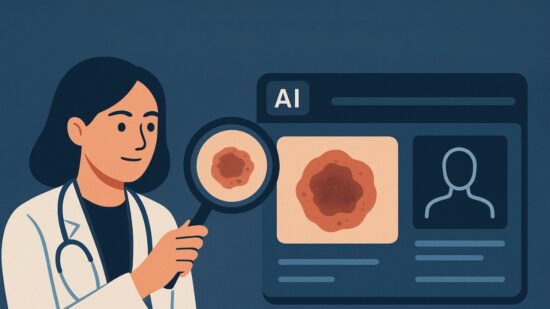
DERMA-PRUNED: AI for Smarter Skin Diagnosis

Introduction Skin ailments are among the most frequent health problems affecting individuals from all age groups. According to a study conducted on Global Burden of Disease (GBD), skin diseases were ranked 18th when evaluated using Disability Adjusted Life Years (DALY) , making it 4th leading cause of disability. Sustainable Development Goals (SDGs) by the United…

Loading