


Background of the Study
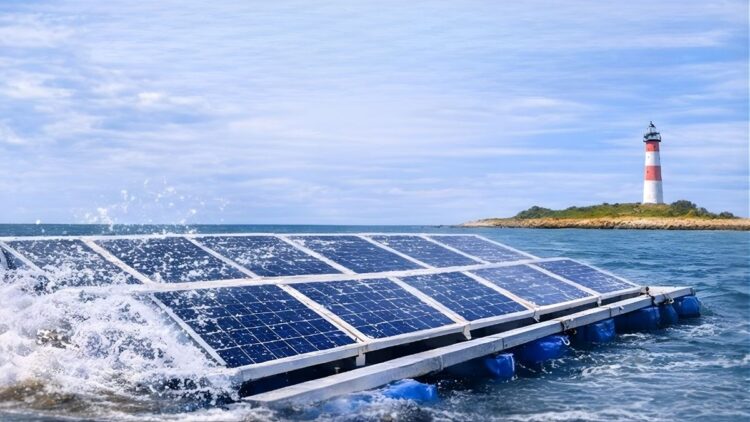
Renewable energy, Floating Solar Photovoltaic technology is evolving as a sustainable approach to generate clean energy without occupying valuable land resources and at the same time reducing water evaporation. Deploying PV modules on water bodies such as lakes, reservoirs, and near coastal zones, FSPV offers efficiency benefits due to natural cooling, as near-coastal zones can improve energy yield through cooling effects from water surfaces. However, marine deployments introduce a critical environmental stressor, salt deposition caused by seawater waves passing over solar panels, where retained water evaporates and leaves salt residues behind. Accumulation of Salt on floating solar photovoltaics modules can induce corrosion, block sunlight, alter surface conductivity and accelerate electrical degradation. Despite rapid global interest in floating solar project installations, the impact of salt deposition on FSPV performance remains underexplored, particularly under realistic marine conditions.
Objective of the Research
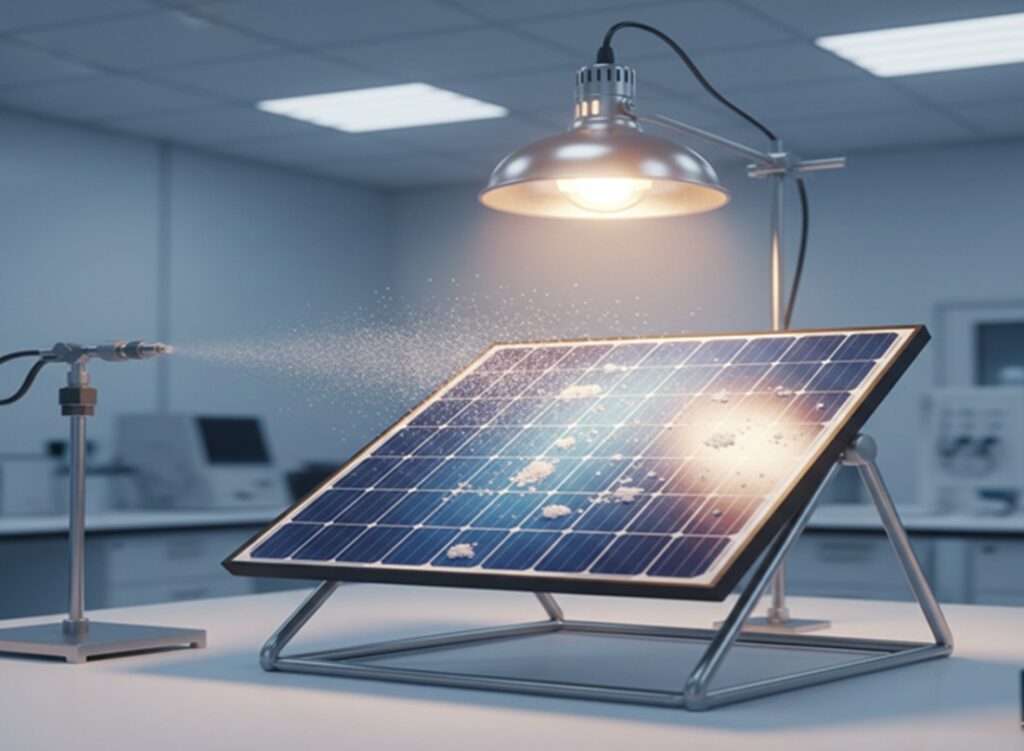
The Main objective of this research is to experimentally examine how salt deposition affects floating solar panels in terms of electrical output, thermal behavior, and long‑term economic performance. This research focused on quantifying losses in power generation, identifying physical degradation mechanisms using advanced diagnostic tools, and evaluating how these changes influence the techno-economic feasibility of larger-scale floating solar power plants in marine environments.
Identified Research Gap
Most existing studies on photovoltaic soiling focus on dust accumulation in dry, terrestrial environments. Limited experimental data exist on salt-induced degradation, especially for floating solar systems exposed to simulated wave action and evaporation. Additionally, previous research rarely integrates electrical diagnostics with thermal and electroluminescence imaging or extends findings to project-scale economic assessments. This research aims to bridge these knowledge gaps.
Novelty of The Research
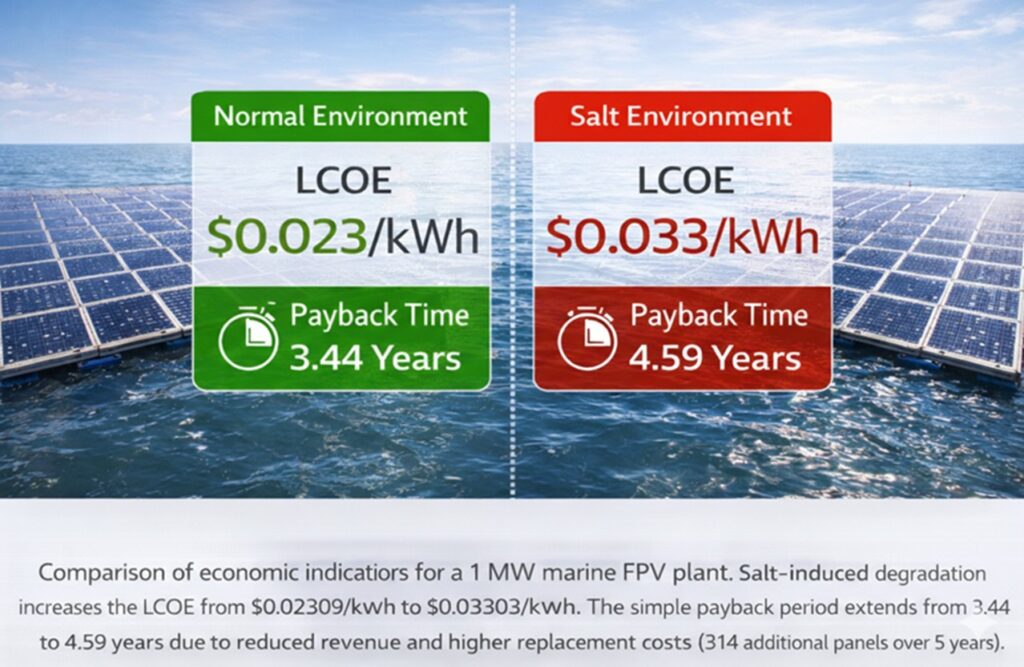
This study’s novelty lies in its combined experimental and analytical framework. A laboratory-scale experimental setup was developed to simulate seawater wave action and salt deposition on floating solar modules. Electrical performance was analyzed using current-voltage (IV) characteristics, while thermal imaging identified hotspot formation and electroluminescence imaging revealed micro-cracks and shunting paths. The study uniquely links experimental degradation to techno-economic indicators such as IRR (Internal Rate of Return), NPV (Net Present Value), LCOE (Levelized Cost of Electricity), and payback period for a hypothetical 1 MW plant.
NUST Contribution
This research was conducted at the U.S.-Pakistan Center for Advanced Studies in Energy (USPCAS-E), National University of Sciences & Technology (NUST), Islamabad. The project was supervised by Dr. Abeera Ayaz Ansari (Principal Investigator) of SINES Advanced Integrated Energy Lab, NUST. The research team included Syed Asad Ali Rizvi, Dr. Abdul Kashif Janjua, Muhammad Usman Bin Ahmed, Dr. Hamza Ahmad Raza, and Ghayoor Abbas. NUST provided experimental/laboratory facilities, academic supervision, and technical support essential for the successful completion of this study.
National Benefits and Impact
With Pakistan facing increasing energy demand, limited land availability, and heavy reliance on imported fuels, floating solar represents a promising renewable solution that avoids land use conflicts. By identifying and quantifying salt-induced performance losses, this research supports informed decision-making for offshore and coastal solar deployments. The findings help policymakers, developers, and utilities design resilient floating solar systems, optimise maintenance strategies, and reduce financial risks, thereby supporting Pakistan’s clean energy transition.
Visuals and Experimental Plots
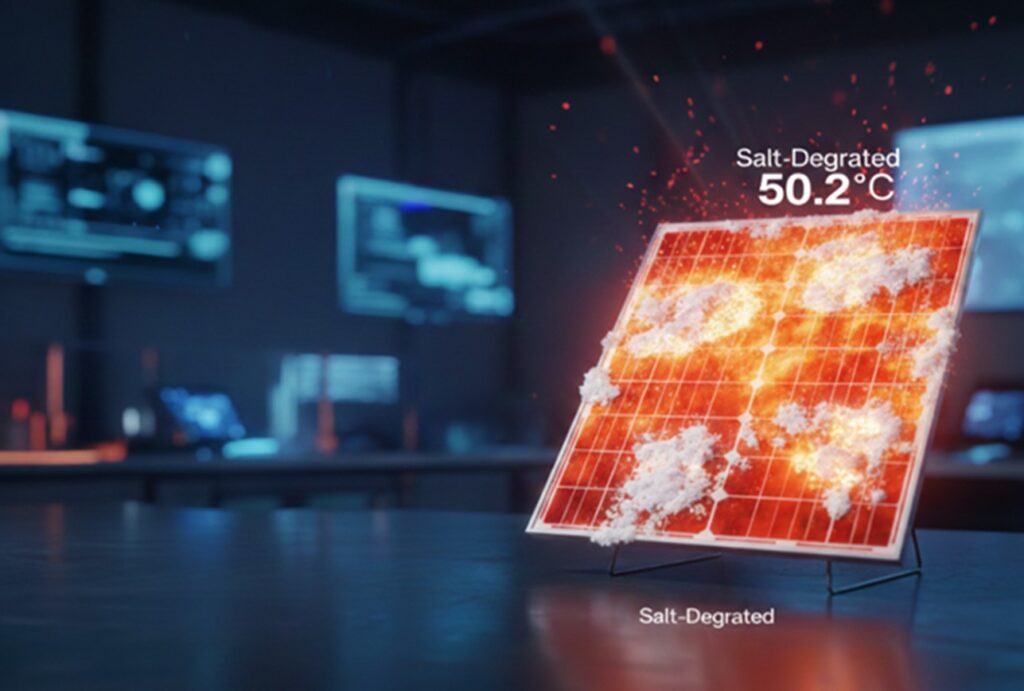
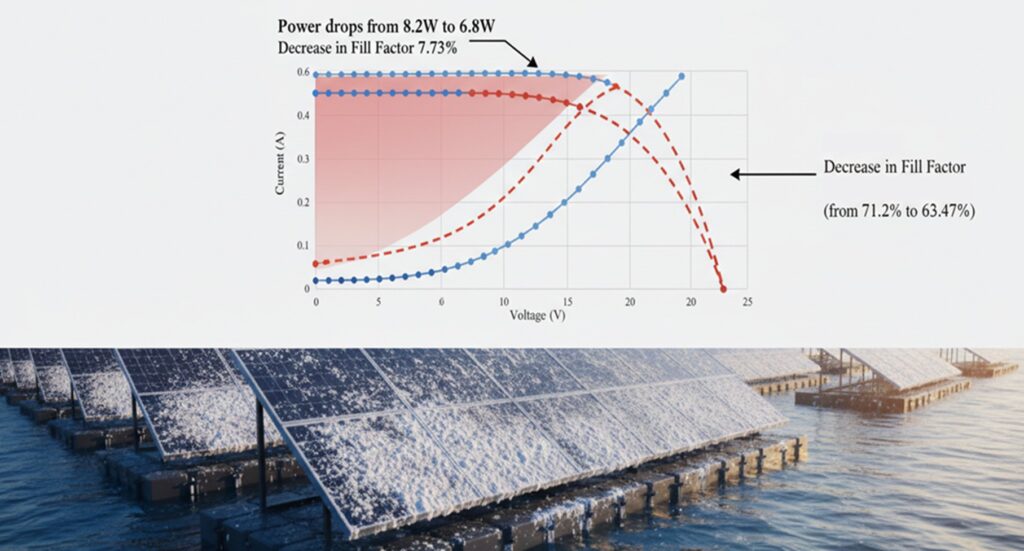
The research includes high‑resolution I–V curves, thermal imaging shows hotspot formation, electroluminescence images identifying electrical defects, and comparative techno‑economic charts. These visuals enhance understanding for both technical and non-technical audiences and clearly demonstrate the impact of salt deposition on system performance.
Key Findings and Outcomes
A 17.1% approximately reduction in peak power output was shown in experimental results. Peak power dropped from 8.2W to 6.8W after salt deposition, with the fill factor declining from 71.2% to 63.47%. Thermal imaging revealed localized hotspots reaching approximately 50.2°C, increasing the risk of long-term module failure. Techno-economic analysis indicated a 43% increase in LCOE, a reduction in IRR from 28.77% to 22.21% and an extended payback period. These outcomes highlight the necessity of salt mitigation strategies such as salt-resistant module designs, optimized cleaning schedules, and anti-soiling coatings.
Collaboration Opportunities and Conclusion
Potential collaboration areas include the development of advanced anti-salt coatings, automated cleaning systems, offshore structural optimization, and long-term field testing in Pakistan’s coastal regions. In conclusion, salt deposition poses a significant yet manageable challenge for floating solar systems in marine environments. This research provides a comprehensive experimental and economic framework to support the sustainable adoption of marine FSPV technologies.
Funding Agency
This research was conducted with institutional support from USPCAS-E, National University of Sciences and Technology. No external project-specific funding was declared.
Acknowledgements
We acknowledge the support of the U.S.-Pakistan Center for Advanced Studies in Energy (USPCAS-E) for access to laboratory and computing resources. The MS thesis research was completed by Syed Asad Ali Rizvi, MS Research Scholar, Department of Energy Systems Engineering, NUST-USPCAS-E, under the supervision of Dr. Abeera Ayaz Ansari.
The author is a MS Research Scholar at Energy Systems Engineering, U.S. Pakistan Center For Advanced Studies In Energy (USPCAS-E), National University of Sciences and Technology (NUST).
Research Profile: https://bit.ly/4rJXE8V
The project PI is an Assistant Professor, at U.S. Pakistan Center For Advanced Studies In Energy (USPCAS-E), National University of Sciences and Technology (NUST). She can be reached at [email protected].
Research Profile: https://bit.ly/4r93b94