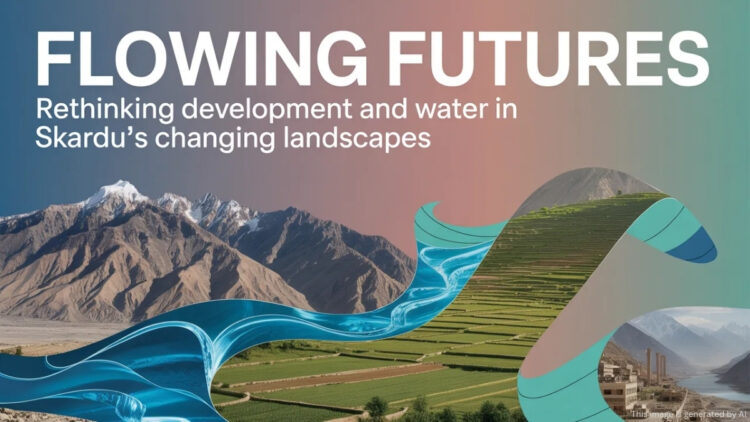

Through the crisp winters and spring blossoms, the quiet landscape of Skardu slowly transforms into a bustling city. Quiet corners of the streets fill with high altitude trekkers, visitors, and tourists who flood the valley each summer. On the surface, this paints a picture of prosperity and new opportunities for the mountain communities of what investors eagerly label as “development.” But beneath this investor-crafted, lies a much harsher reality. Smog-filled mornings, dust and noise rising from constant construction, natural landscapes slowly giving way to concrete blocks, contaminated water streams, and waste scattered across once-pristine fields now form the hidden footprint of tourism. These valleys, once celebrated for their fresh air, clean springs, and orchards rich with local produce, are now struggling with water scarcity, unreliable power, growing waste, and declining agricultural yields.
With the changing connotations of development and sustainability there is an urgency to unfold what these terms mean to the communities in question and how it translates into policy making and development initiatives. This study tried developing a deeper understanding of the disconnect between development interventions, natural landscapes and mountain community as an interwoven nexus.
With the changing connotations of “development” and “sustainability,” it becomes urgent to understand what these terms truly mean for the communities living here and how they translate into policies and projects on the ground. An analysis of Skardu city’s expanding tourism infrastructure alongside its water systems reveals a clear and troubling pattern. Water, once the primary factor guiding settlement, agriculture, and seasonal movement in these mountain landscapes, has gradually been reduced to a background resource assumed to be abundant, extractable, and endlessly available for growth. Tourism-led development has unfolded with little regard for the hydrological logic that historically sustained life in the valley.
The study highlighted deep-rooted factors tourism expansion, infrastructure growth, and unsustainable water use driving imbalance in Skardu’s natural environment. Hotels, guesthouses, and resorts are increasingly constructed near freshwater springs, glacial melt channels, and irrigation networks. During peak tourist seasons, water extraction for hospitality far exceeds domestic and agricultural needs, creating acute shortages for local households and farmers. This seasonal overlap when tourist numbers surge and water demand peaks pushes an already climate-sensitive system beyond its limits.
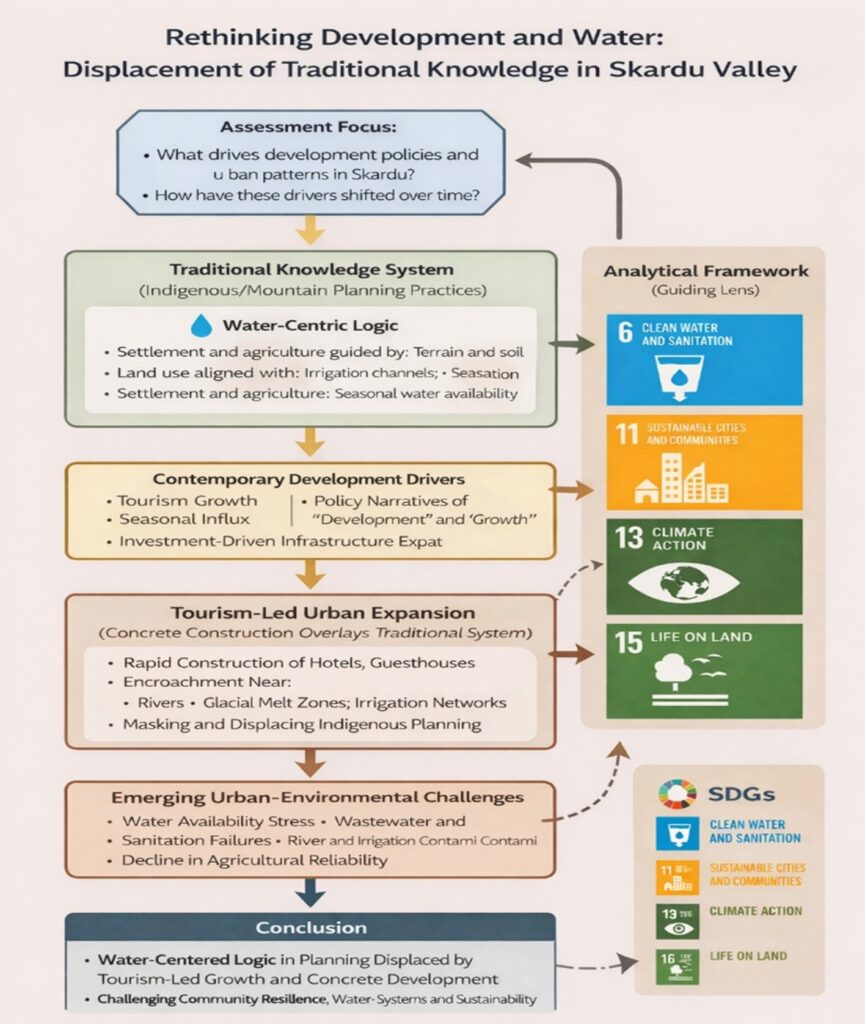
Scarcity is compounded by contamination. Untreated wastewater from tourism facilities is routinely discharged into streams and rivers, degrading water quality downstream. Communities report declining irrigation reliability, soil stress, and crop damage. At the same time, pressure to supply the hospitality sector has accelerated shifts toward chemical fertilizers and rapid-yield crops, further intensifying water and land degradation.
Skardu city now stands as a concentrated expression of this imbalance. Landscapes once shaped by terrain and communal water-sharing practices are increasingly dominated by unregulated construction and concrete expansion. Framed as development and opportunity, this growth delivers uneven benefits while transferring its environmental costs to water depletion, pollution, and agricultural decline onto local communities.
Viewed through the lens of water, tourism in Skardu emerges not simply as an economic sector but as a force restructuring access to resources and resilience. When development is measured only in rooms built and revenues generated, water remains invisible until scarcity, pollution, and conflict make it impossible to ignore.
Taken together, this study points toward a way forward for development in Skardu, one that reconsiders how water and community knowledge are integrated into planning and decision-making. Prevailing approaches to development and water consumption, often guided by infrastructure expansion and tourist demand, need to be evaluated differently in mountain landscapes where water governs livelihoods, agriculture, and settlement patterns. Meaningful inclusion of local values, practices, and ecological understanding is essential to ensure that growth does not come at the cost of resilience. By realigning policies and infrastructure planning with the rhythms of the landscape and the knowledge of its inhabitants, Skardu can pursue development that strengthens both communities and the natural systems they depend on.
The author is Lecturer at Department of Basic Sciences and Humanities at Military College of Engineering, National University of Sciences and Technology (NUST). She can be reached at [email protected].