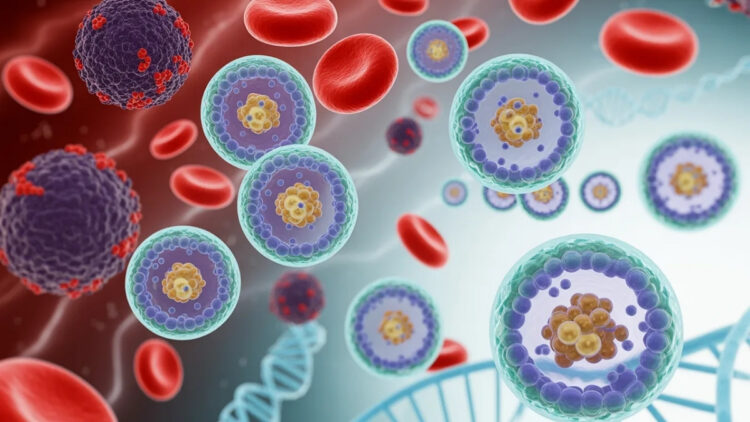

Leukemia is a serious blood cancer that begins in the bone marrow, the soft tissue inside bones where blood cells are produced. In this disease, the body starts producing abnormal white blood cells that do not function properly and multiply uncontrollably. These defective cells crowd out healthy blood cells, leading to infections, weakness, bleeding problems, and damage to vital organs. Treating Leukemia is challenging because therapy must destroy cancer cells while protecting healthy tissues.
A research team led by Dr Nosheen Fatima Rana, through a collaboration between National University of Sciences and Technology (NUST) and Quaid-i-Azam University (QAU), aimed to find a safer and more effective way to treat this disease. The central goal of this collaboration was to improve existing cancer treatments so that patients could benefit from strong anticancer effects with fewer harmful side effects.
The Challenge: A Strong Drug with Serious Side Effects
One of the most widely used drugs for Leukemia is doxorubicin (DOX). This medicine is highly effective because it targets rapidly dividing cancer cells and stops their growth. However, at higher doses, DOX can also damage healthy organs, especially the heart, liver, and kidneys. Many patients experience severe side effects because the drug affects both cancerous and healthy cells.
Another compound, zinc diethyldithiocarbamate (Zn-DDC), derived from disulfiram, has shown promising anticancer activity. Despite its potential, Zn-DDC breaks down quickly in the stomach and bloodstream, which limits its usefulness as a treatment. One drug is powerful but toxic, while the other is promising but unstable. This imbalance created the need for a smarter solution.
A Tiny Solution with Big Potential
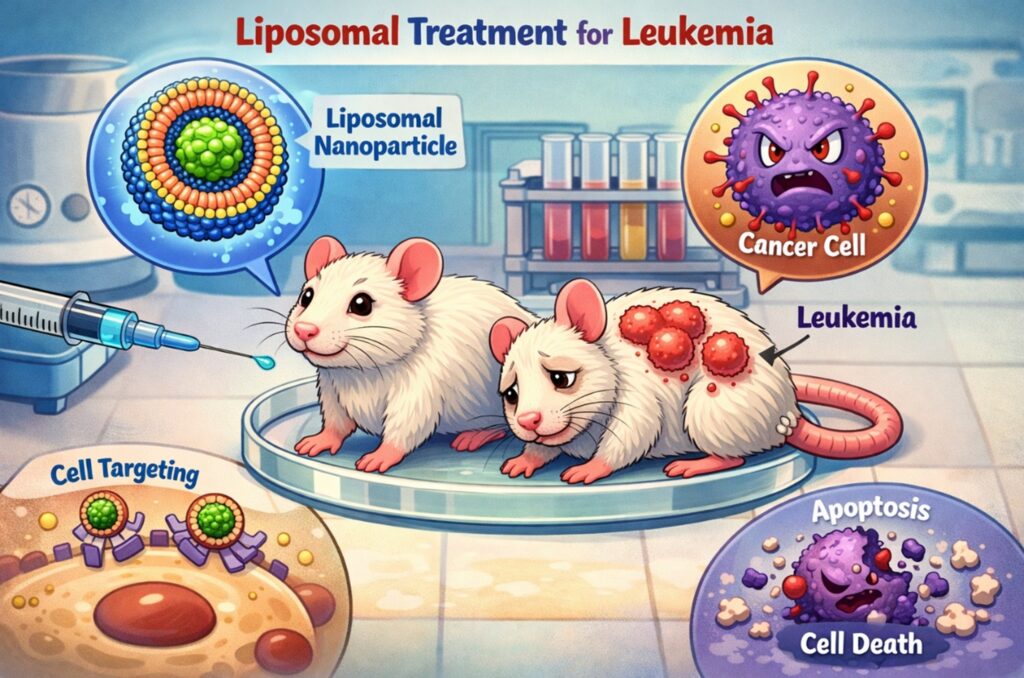
To overcome these challenges, nanotechnology was introduced into the treatment strategy. Liposomal nanoparticles were developed as extremely small, fat-based bubble-like structures capable of carrying drugs inside them. These tiny carriers protect medicines from breaking down too early and help deliver them more effectively to the target area.
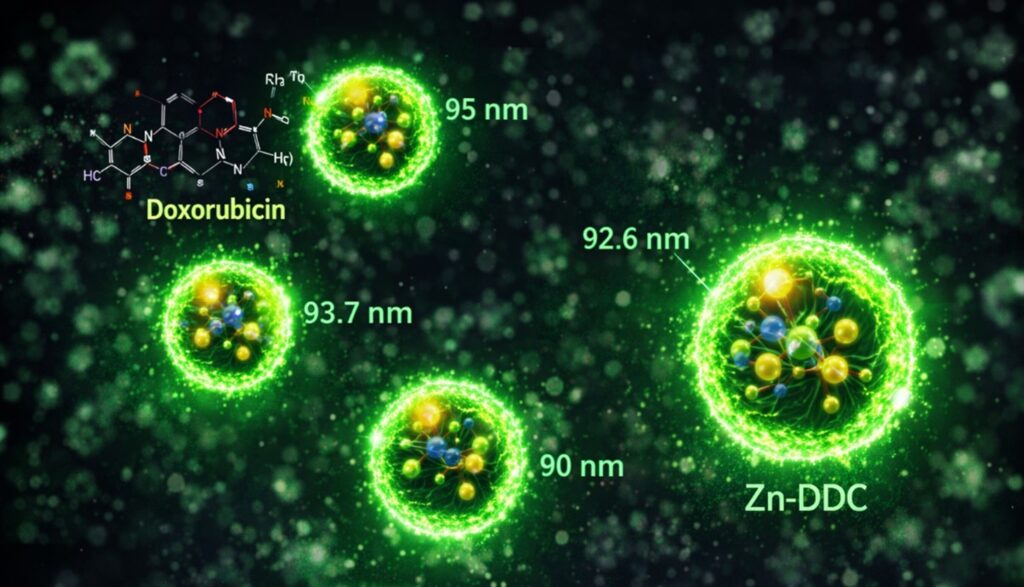
Using a method known as thin-film hydration, three different formulations were prepared. The first formulation contained doxorubicin inside liposomes. The second contained Zn-DDC inside liposomes. The third formulation combined both DOX and Zn-DDC within the same liposome (Figure 1) . The intention behind this design was to improve stability, reduce toxicity, and enhance overall treatment effectiveness.
How Was the Study Conducted?
The investigation began with laboratory testing to examine how effectively the new formulations could destroy cancer cells. Antioxidant activity was also assessed to determine the ability to reduce harmful oxidative stress within cells.
Following promising laboratory results, animal studies were conducted using Wistar rats. Leukemia was induced using benzene, a chemical known to damage bone marrow and create blood abnormalities similar to human Leukemia . Once the disease was established, treatment with the different liposomal formulations was initiated.
Several evaluations were performed to assess the outcomes. Blood cell counts were measured to determine improvements in red and white blood cells. Liver and kidney function was examined through enzyme testing. Tissue samples were analyzed under a microscope to observe structural recovery. The number of abnormal blast cells in the blood and organs, a major indicator of Leukemia severity, was also assessed.
The Results: A Promising Breakthrough
The findings were highly encouraging. All liposomal formulations improved blood cell counts and helped restore liver and kidney enzyme levels closer to normal ranges. A significant reduction in abnormal blast cells was observed in both blood and tissues. Tissue damage was also notably reduced. Encapsulation inside liposomes successfully addressed the previous limitations of instability and toxicity. Drug delivery became more controlled and efficient within the body.
An especially important outcome emerged from the combined formulation containing both DOX and Zn-DDC. In this case, Zn-DDC appeared to reduce the toxicity typically associated with doxorubicin. The overall results in this group were more comparable to normal, healthy conditions than treatment with DOX alone. This observation suggests that Zn-DDC may provide a protective effect while maintaining anticancer activity.
Why Is This Important for Patients?
Cancer treatment is not only about eliminating cancer cells; it is also about preserving organ function and quality of life. Severe side effects often limit the dosage patients can tolerate and may reduce overall treatment success.
This research demonstrates that smarter drug delivery systems can improve the performance of existing medicines. Instead of increasing drug strength or dosage, improving the way drugs are transported and released in the body can reduce harm while maintaining effectiveness. Such an approach may lower the risk of heart, liver, and kidney damage during chemotherapy.
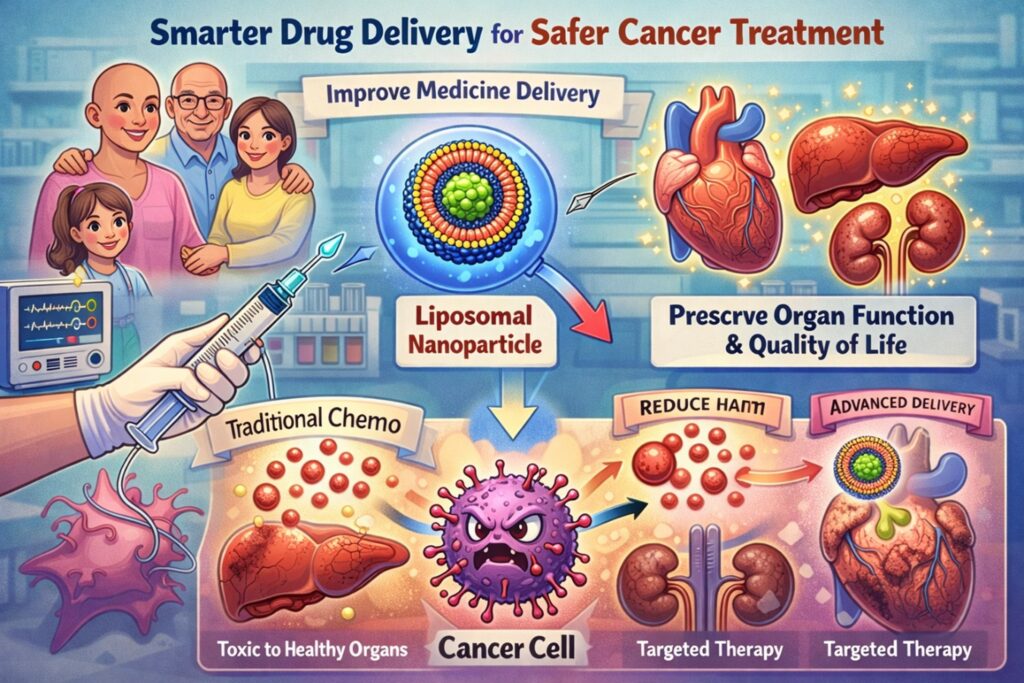
Although these findings are based on animal studies and further research is required before human clinical use, the results offer hope. Liposomal therapies could one day provide safer chemotherapy options. More stable and controlled combination treatments may improve patient outcomes and reduce complications.
The collaboration between NUST and QAU reflects the growing contribution of Pakistani research institutions to global medical innovation. Under the leadership of Dr Nosheen Fatima Rana, this work represents an important step toward developing cancer treatments that are both powerful and protective.
Smarter Treatment, Healthier Lives
For many years, cancer therapy focused mainly on stronger drugs and higher doses. This research introduces a different philosophy. Rather than making drugs stronger, the focus shifts to making treatment smarter. By improving how medicines are delivered, it becomes possible to fight cancer effectively while minimizing harm to the body.
With continued research and future clinical trials, such advancements may transform the treatment landscape for leukemia and offer patients therapies that are not only life-saving but also life-preserving.
References
Urooba Tariq et al 2025 Biomed. Mater. 20 065003. DOI 10.1088/1748-605X/ae0554
The author is an Associate Professor, at School of Material and Manufacturing Engineering (SMME), National University of Sciences and Technology (NUST). She can be reached at [email protected].
Research Profile: https://bit.ly/4043DJX