

Rising concentrations of carbon dioxide (CO₂) in the atmosphere are widely recognized as a primary source of global climate change. Rapid industrialization, increasing energy demand, and continued reliance on fossil fuels have significantly intensified CO₂ emissions from power plants, manufacturing facilities, and transportation systems. Despite the global push toward renewable energy, reaching complete decarbonization will take sustained effort over time.
Carbon capture has emerged as a critical technology for reducing emissions at their source. CO₂ capturing units are designed to selectively separate carbon dioxide from industrial exhaust streams before it is released into the atmosphere leading to global warming.
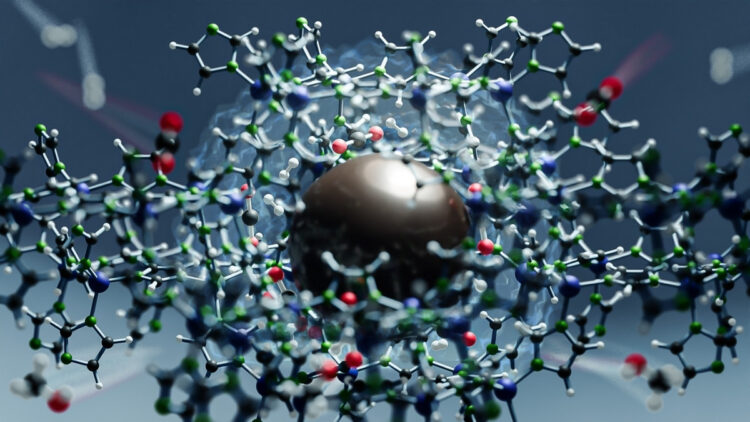
Traditional CO₂ capture technologies, often face limitations such as high energy consumption, operational complexity, large footprints, and elevated costs. These challenges have restricted their widespread adoption, particularly in developing economies and energy-intensive industries. As a result, there is a growing demand for next-generation CO₂ capturing units that are compact, energy-efficient, recyclable, cost-effective, and adaptable to diverse industrial environments. Moreover, selectivity of the material for separation from exhaust gases is a global challenge. Addressing this challenge through indigenous innovation, Dr. Fouzia Malik and her research team at the School of Interdisciplinary Engineering & Sciences (SINES), National University of Sciences & Technology (NUST), have successfully developed a high-efficiency CO₂ capturing unit aimed at sustainable carbon mitigation. This system has been designed with high accuracy sensors which monitor the flow and capture of CO2 through the column packed with silica and Metal Organic Framework, enabling up to 98% CO₂ capture efficiency under laboratory conditions.
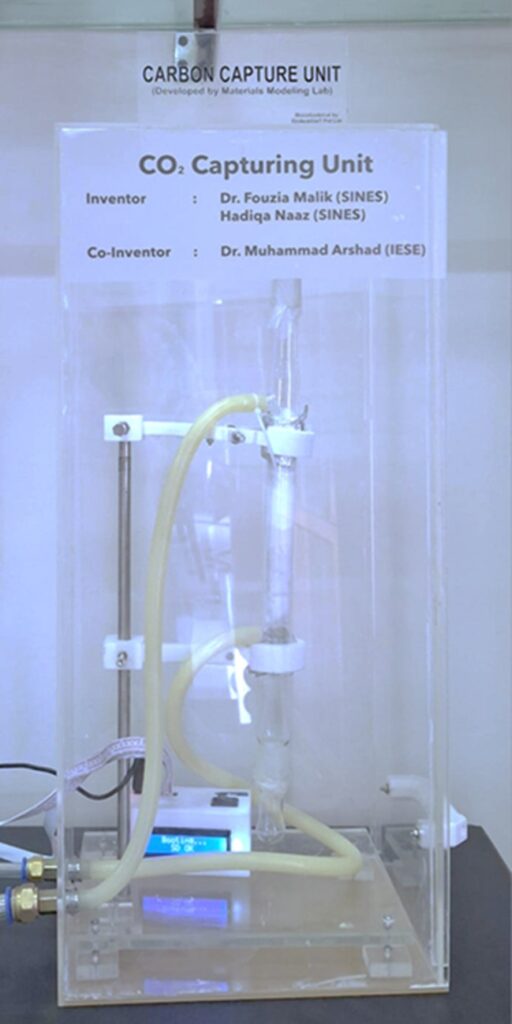
A distinguishing feature of the CO₂ capturing unit is its modular and lightweight design, along with sustainable CO2 capturing materials. This approach significantly reduces production costs while allowing rapid customization for different emission sources, including power plants and industrial exhaust streams. The project funded by RIC, NUST reflects a multidisciplinary effort integrating materials science, chemical engineering, and computational modeling. The future goal of the project is to translate laboratory-scale efficiency into real-world carbon management solutions that align with Pakistan’s climate commitments and global decarbonization goals.
By advancing indigenous CO2 technology, this innovation reinforces NUST’s commitment to climate action, sustainable engineering, and impactful research toward decarbonization efforts.
The author is a Professor at School of Interdisciplinary Engineering and Science (SINES), National University of Sciences and Technology (NUST). She can be reached at [email protected].
Research Profile: https://scholar.google.com/citations?user=oQFKv84AAAAJ&hl=en