


Introduction
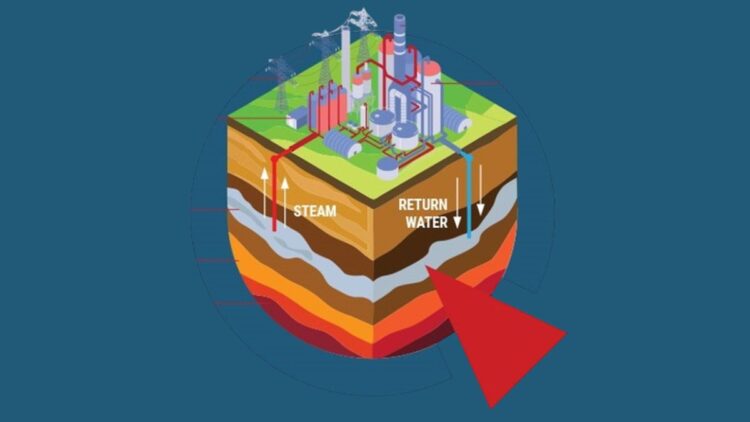
Oil refining is an energy-intensive process that needs a large amount of direct or indirect heat. Particularly, about 32–35% of the entire global energy is consumed in the industrial sectors to produce heat and steam needed for processing crude oil and keeping refined products at the right temperature. Burning fossil fuels to generate process steam for industrial use leads to high operating costs and release of greenhouse gases (GHGs), which contribute to global warming.
The worldwide search for alternative fuels continues due to the ongoing depletion of conventional fuels. The bulk of industrial processes, such as pasteurization, extraction, dehydration, sterilization, and distillation, operate at the medium temperature range between 60 ℃ and 280 ℃. For this temperature range, NUST team in collaboration with researchers from University of Stavanger, Norway investigate the viability of using renewable energy resources, such as solar energy, and geothermal energy to provide low-pressure process steam for Attock Refinery Limited in Rawalpindi, Pakistan.
Why do Refineries need so much Heat?
In an oil refinery, crude oil is heated and separated into useful products like diesel, gasoline, kerosene, Residual fuel oil and bitumen. Even after processing, these products must be kept warm in storage tanks so they can flow easily during transportation. Traditionally, this heat comes from boilers burning fossil fuels such as natural gas, diesel, or gasoline.
The problem is that burning these fuels releases large amounts of CO₂ and other greenhouse gases. With growing pressure to reduce emissions and fuel costs, refineries need alternative energy solutions that are reliable and affordable.
The Hybrid Solar -Geothermal System
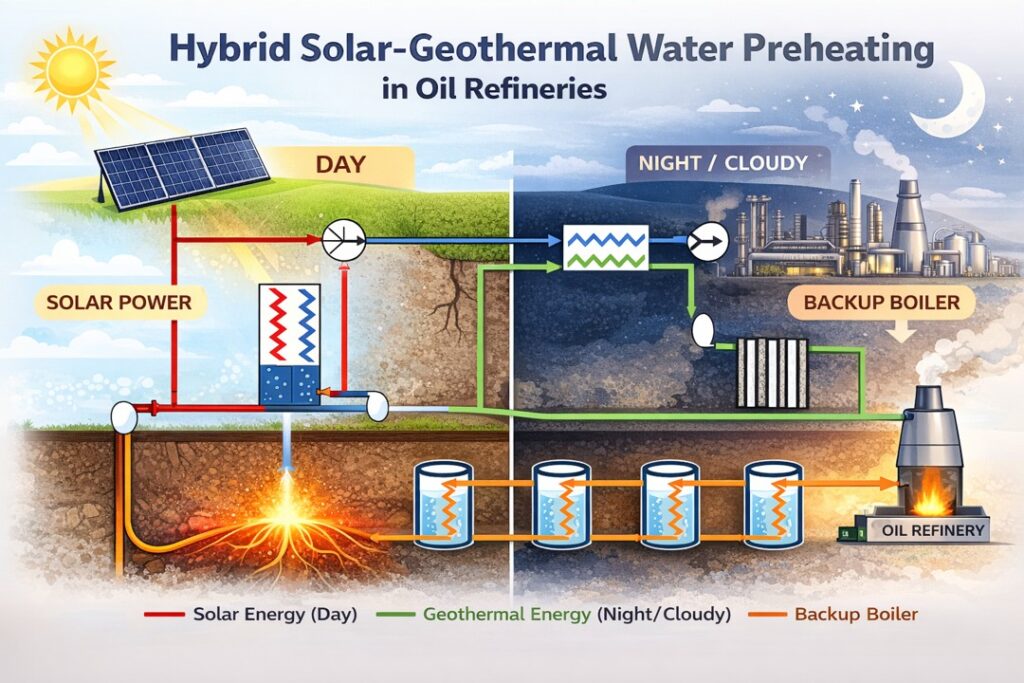
A recent study led by Assoc. Prof. Naveed Ahmed and his team at USPCAS-E in collaboration with researcher from Department of Energy and Petroleum Engineering, University of Stavanger, Norway, presents an innovative approach of combining solar (daytime) and geothermal energy (night or cloudy periods) for preheating water. A conventional boiler as backup for generating steam from hot water to regulate the temperature of refinery products.

How does the system work?
Evacuated Tube Collectors (ETCs) capture sunlight and heat a fluid inside the tubes. This heat is transferred to water through a heat exchanger-1, raising its temperature before it enters the boiler.
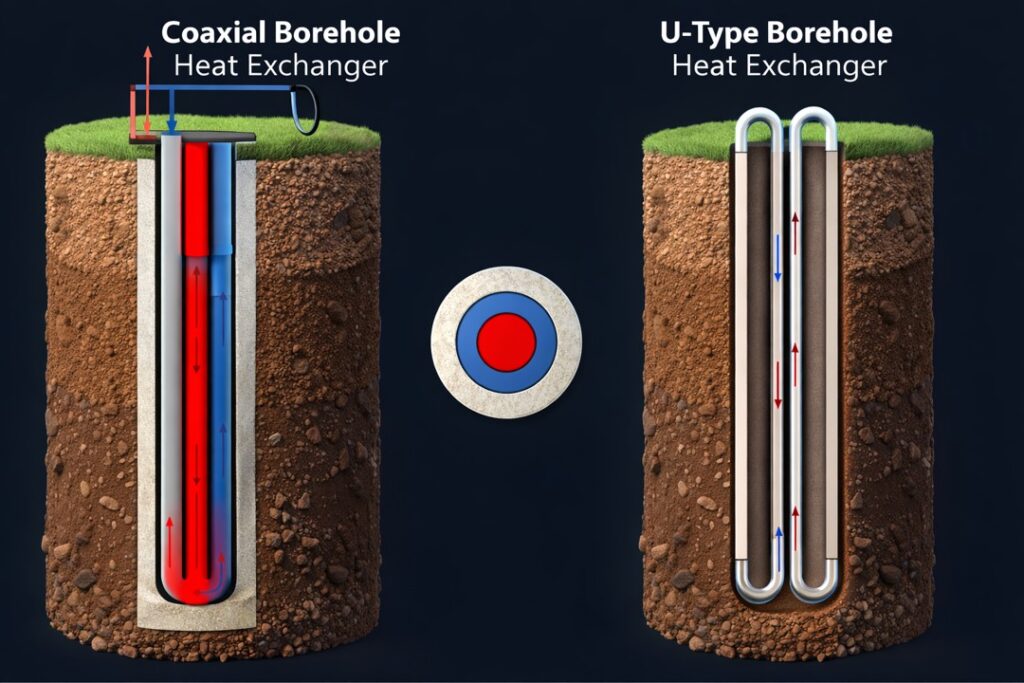
The utilization of geothermal energy for heating can be categorized as coaxial tubes and U-tubes. In coaxial design, through outer pipe the fluid travels down and is heated by the surrounding formation. The hot fluid will go up through the inner pipe. U-type tube comprising three boreholes’ deeps: one horizontal and two verticals. Two vertical boreholes are interconnected by a single horizontal borehole. The cold fluid enters in one vertical borehole, subsequently changing direction of the fluid flow into horizontal borehole to extract heat from geothermal BHEs and as a result the hot fluid exit from second vertical borehole.
What did the researchers study?
- Size of ETC and heat transfer fluid flow rate
- Number of boreholes
- Radius and depth of boreholes
- Configuration of boreholes
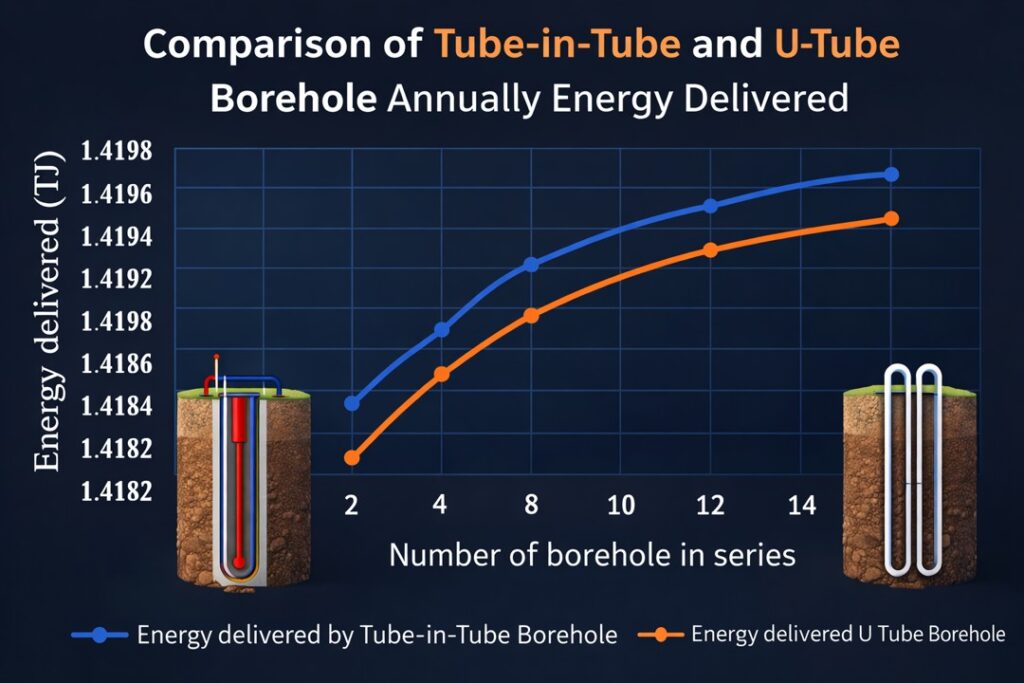
The arrangement with the 48 boreholes in series (16 × 3) optimizes energy extraction of system, making it a more effective configuration. The energy delivered by the tube-in-tube configuration is around 1.4190 TJ, whereas the U-tube delivers slightly less energy, around 1.4185 TJ.
Energy and Environmental Benefits
Through the integration of solar and geothermal borehole heat exchangers, water is preheated using renewable energy, the reduction in combustion within hybrid boilers leads to a significant decrease in greenhouse gas emissions.
The key finding of this paper are:
- The hybrid system contributes a maximum of 28.82% to the annual energy consumption of the boiler under optimal conditions
- The unit boiler achieves a reduction of 54,824 liters, and prevents the emission of 130 tonnes of greenhouse gases annually.
- 1.42 TJ of energy came from geothermal BHE and 422 GJ were supplied by solar collectors each year.
Why this research Matters?
This study proves that renewable energy is not just for homes or power plants. Even heavy industries like oil refineries can significantly reduce their environmental impact without sacrificing reliability. By combining solar and geothermal energy, refineries can reduce GHG emissions and improve long-term sustainability.
This reduction in fuel consumption and carbon dioxide emissions is exclusive to one boiler (ton/day steam) of the refinery, but it may be extended to the other boilers to gain significant fuel savings and GHG reduction.
Acknowledgments
We acknowledge the support of U.S.-Pakistan Center for Advance Studies in Energy (USPCAS-E) for access to computing resources.
The project was completed by Naseer Ahmad Khan, MS Student at Department of Thermal Energy Engineering, under the supervision of Dr. Naveed Ahmed. He can be reached at [email protected].
The author is an Associate Professor at U.S.-Pakistan Center for Advanced Studies in Energy (USPCAS-E), National University of Science and Technology (NUST). He can be reached at [email protected].
Research Profile: https://scholar.google.com/citations?user=UaxTuk8AAAAJ&hl=en