




Introduction
With rapid urbanization and industrial growth, air pollution has become a major environmental crisis, posing severe threats to human health and ecological balance. Among the most concerning forms of pollution is smog, a dense atmospheric layer primarily composed of particulate matter (PM) and sources of secondary PM like sulfur oxides (SOₓ), nitrogen oxides (NOₓ), volatile organic compounds (VOCs), and ammonia (NH₃). These pollutants are linked to respiratory diseases, cardiovascular disorders, and reduced life expectancy.
The Problem
Smog originates from multiple sources, including vehicular emissions, industrial activities, biomass burning, and agricultural waste incineration. The World Health Organization (WHO) has classified smog pollutants as the leading environmental health risk, contributing to millions of premature deaths annually. Cities frequently experiencing smog episodes witness a surge in hospital admissions, disruptions in transportation, daily activities, and economic productivity. Moreover, smog deteriorates ecosystems, reduces agricultural yields, and damages infrastructure, leading to long-term economic and environmental consequences.
The Solution: Smog-Free Tower (SFT)
To combat this crisis, the development of a Smog-Free Tower (SFT) has been proposed—a large-scale air filtration system designed to efficiently remove airborne pollutants and improve urban air quality. The SFT provides a sustainable and scalable solution by capturing both primary and secondary particulate matter before it accumulates to hazardous levels. By integrating advanced air filtration techniques, optimized energy consumption, and eco-friendly materials, this system aims to significantly reduce smog levels and promote healthier urban environments.
How it Works
Design and Construction of the SFT
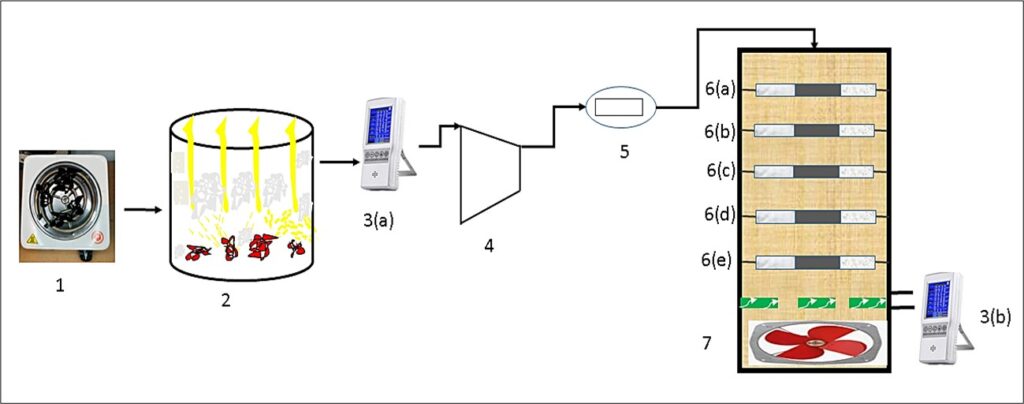
To combat urban air pollution, an efficient SFT was developed using galvanized iron sheets, with a height of 1067 mm and a diameter of 381 mm. The tower uses PM2.5 filters (PMF) made of activated carbon, polyester fiber, and polypropylene fiber to effectively capture PM.
The SFT operates by generating self-generated smog using coal and cooking oil, which is then passed through the filtration system. A bottom suction fan (1350 rpm) ensures the efficient flow of polluted air through the filters, maximizing particulate removal.
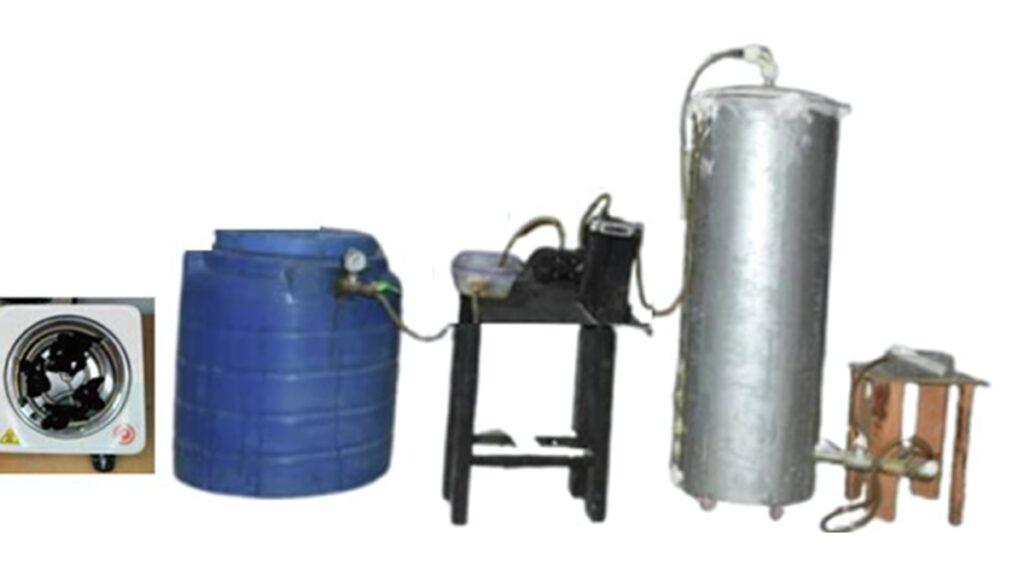
Characteristics of the Filtration System
The filtration system of the SFT is designed to optimize air purification efficiency:
- High Removal Efficiency: Achieves 97.8% removal of PM2.5 and 98.4% removal of PM10 under optimal conditions.
- Optimized Contact Time: The best filtration performance occurs at 50 minutes, allowing maximum pollutant interaction with the filter.
- Energy-Efficient Operation: Consumes 48.3 kWh/month, making it a sustainable solution for urban environments.
- Wide Coverage Area: Effectively cleans an area of 113 m², improving air quality for surrounding communities.
Application in Air Pollution Control
The Smog-Free Tower was tested under various conditions to optimize its efficiency:
- Effect of Filter Position: The first filter position showed the highest removal efficiency, while the second position had reduced performance due to increased airflow resistance.
- Effect of Filter Diameter: A 381 mm diameter filter removed up to 60% more PM2.5 than a 254 mm diameter filter, highlighting the importance of filtration surface area.
- Reusability: The filters remained effective for 3–4 cycles before requiring replacement or regeneration.
Benefits of the SFT
The implementation of SFT in urban environments offers several advantages:
✅ Improved Air Quality: Effectively reduces harmful PM levels, promoting public health.
✅ Cost-Effective Solution: Removes 14,271 µg/m³ of PM for just $1, making it an affordable air pollution control strategy.
✅ Sustainable and Scalable: Operates with minimal energy consumption and can be deployed in highly polluted areas such as industrial zones, highways, and residential areas.
Towards a Smog-Free Future
The SFT is a promising step toward mitigating air pollution in densely populated cities. With further improvements in filter design, regeneration techniques, and energy efficiency, this technology can play a key role in creating cleaner and healthier urban environments.
Materials and Methods
- Construction of SFT: The SFT was fabricated using galvanized iron sheets, with a height of 1067 mm and a diameter of 381 mm.
- Filtration System: The SFT was equipped with PM2.5 filters (PMF) made of activated carbon, polyester fiber, and polypropylene fiber to capture particulate matter.
- Generation of Self-Generated Smog (SGS): Smog was artificially created using coal (63 g per run) and cooking oil (10 ml per run), heated on a 1000 W electric stove to simulate real-world air pollution conditions.
- Performance Evaluation: The removal efficiency of PM2.5 and PM10 was analyzed under different contact times (40, 50, and 60 min), filter diameters (254 mm and 381 mm), and filter positions within the SFT.
- Characterization Techniques: Air quality was monitored using an air quality monitor (AQM, Yvelines, capable of detecting PM2.5 up to 1000 µg/m³), while airflow rate was measured using a digital air flow meter (MEMS, 0–50 L/min range).
- Energy Consumption Analysis: The operational power usage of SFT was determined based on fan speed (1350 rpm) and air compressor performance, resulting in an estimated monthly energy consumption of 48.3 kWh.
Results and discussion
- The SFT demonstrated high PM removal efficiency, with PM2.5 and PM10 removal rates of 97.8% and 98.4%, respectively.
- Filter diameter significantly influenced performance, with the 381 mm diameter filter capturing up to 60% more PM2.5 than the 254 mm diameter filter due to its larger surface area.
- Filter position affected efficiency, with the first position achieving the highest removal rates, while the second position showed lower efficiency due to increased airflow resistance.
- The SFT effectively cleaned an area of 113 m² with an energy consumption of 48.3 kWh per month, making it a cost-effective air purification system.
- Filter reusability tests showed that filtration efficiency remained high for up to 3–4 cycles, after which performance declined due to saturation.
Conclusion
This study demonstrates the effectiveness of a Smog-Free Tower (SFT) equipped with advanced PM filters for mitigating air pollution. The optimized filter design, energy-efficient operation, and high removal efficiency make the SFT a viable solution for improving urban air quality. Further improvements in filter materials, regeneration techniques, and scalability could enhance its long-term effectiveness.
Recommendations
Explore alternative filtration materials to enhance PM removal efficiency and extend filter lifespan.
✅ Optimize filter design and airflow control to further reduce resistance and improve pollutant capture.
✅ Scale up the SFT for deployment in larger urban areas with high pollution levels.
✅ Investigate the removal of gaseous pollutants (NOₓ, SOₓ, and VOCs) to enhance overall air purification capabilities.
Benefits
Improved Air Quality: Effectively reduces PM levels, leading to healthier urban environments.
Sustainable Solution: Operates with low energy consumption (48.3 kWh/month), making it an eco-friendly approach to air purification.
Cost-Effective: Removes 14,271 µg/m³ of PM for just $1, offering an affordable pollution control strategy.
Scalable for Urban Deployment: Can be implemented in industrial zones, highways, and residential areas to combat smog.
The author is an Assistant Professor at US-Pakistan Center for Advanced Studies in Energy (USPCAS-E), National University of Sciences and Technology (NUST), Islamabad. She can be reached at [email protected].
Research Profile: https://bit.ly/4lAZBlA