
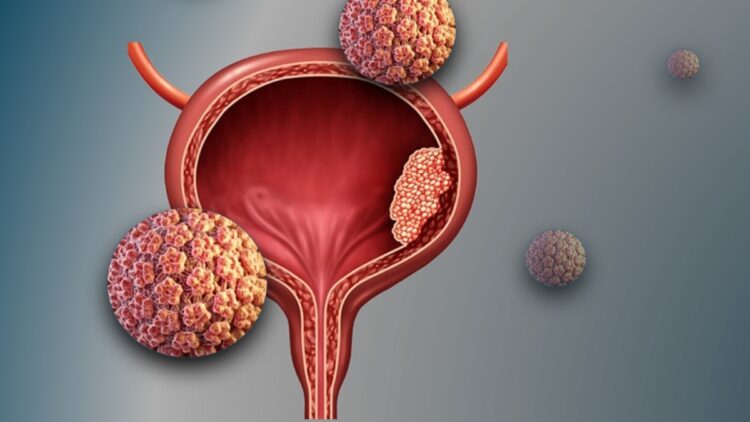

HPV: The Silent Trigger for Cancer
Human Papillomavirus (HPV) is a non-enveloped, double-stranded DNA virus from the Papillomaviridae family and one of the most common sexually transmitted infections (STIs). Nearly all sexually active individuals acquire HPV at least once, with most infections being asymptomatic and cleared by the immune system. However, persistent infections can lead to invasive cancers, contributing to ~5% of all cancers worldwide. This burden is higher in low- and middle-income countries (LMICs) due to limited screening and healthcare access. HPV’s clear association with anogenital carcinomas raises concerns about its role in urologic carcinomas (bladder, renal, ureter, etc.) due to anatomical proximity. This etiological link remains under-researched, creating a critical gap in the literature, as previous studies on HPV’s correlation with urologic cancers have yielded inconclusive results.
Research Gap
Pakistan, where sexual education is controversial and limited, has become a hotspot for HPV transmission and, therefore, is highly susceptible to HPV-associated cancers. Unfortunately, the data regarding HPV’s association with anogenital and urologic cancers in the Pakistani population is scarce or even nonexistent, thereby making HPV a major public concern. Therefore, to better comprehend the elusive association of HPV with bladder cancer, the present study aimed at assessing the prevalence of HPV infection in bladder cancer patients from Pakistan, with a focus on high-risk HPV genotypes 16 and 18.
Project Team and Contributions
A research team from the Atta-ur-Rahman School of Applied Biosciences (ASAB), National University of Sciences and Technology (NUST), conducted this project in collaboration with Fauji Foundation Hospital (FFH), Rawalpindi, Pakistan, and Northwest School of Medicine (NWSM), Peshawar, Pakistan. The project was carried out under the supervision of Dr. Saira Justin and Dr. Aneela Javed from ASAB, NUST, with Dr. Khalid Farouk (FFH) and Dr. Nuzhat Sultana (NWSM) as key clinical collaborators. The research team also included MS student Ms. Hafsa Yousaf, who contributed significantly to the study.
Study Design
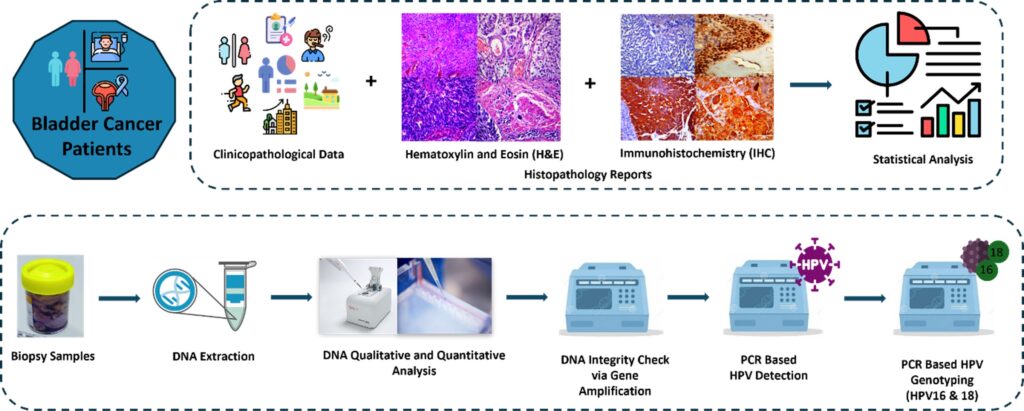
After obtaining informed consent, bladder tissue samples were collected from 63 bladder cancer patients, with diagnoses confirmed through hematoxylin and eosin (H&E) staining and immunohistochemistry (IHC). DNA was then extracted and screened for HPV using L1 consensus primers to detect viral presence. HPV genotyping was performed using E6-E7 specific primers for HPV16 and HPV18 through conventional polymerase chain reaction (PCR), ensuring precise identification of high-risk HPV types.
Results & Conclusion
Out of 63 bladder cancer cases, 10 (15.9%) tested positive for HPV. Among these, 3 cases (30%) were linked to HPV16, 6 cases (60%) to HPV18, and 1 case was associated with another high-risk HPV type. Most HPV-positive bladder cancers were of less aggressive type called low-grade urothelial carcinoma. These cases were far more common in men than women, with a 9:1 ratio, and the average age of affected individuals was 65 years. The study found no clear link between HPV infection and lifestyle factors like smoking, exercise, or health conditions such as diabetes and high blood pressure. In conclusion, while HPV was not widespread among bladder cancer cases, its presence in a subset of patients suggests it may be a contributing risk factor. This highlights the need for further research and preventive strategies, especially in LMICs, where awareness and healthcare access remain challenging.
A Call for Public Awareness
This study highlights the need for public education on safe practices, risk factors, and preventive measures for STIs and related cancers. Raising awareness, promoting community discussions, and encouraging early screening can help detect infections early and prevent serious health conditions.
Funding Agency
The research was supported by the Higher Education Commission (HEC), Research and Development Division, National Research Program for Universities (NRPU).
Original Research Paper
Hafsa Yousaf, Aneela Javed, Nuzhat Sultana, Khalid Farouk, Muhammad Usman, Gul Rehman Khan, Miriam Kathleen Gomez, Sobia Asghar, Saira Justin, Unlocking the secrets: Exploring the connection between HPV and bladder cancer in Pakistan, Urologic Oncology: Seminars and Original Investigations, 2025, ISSN 1078-1439, https://doi.org/10.1016/j.urolonc.2025.03.014
About the Author
The author is an Assistant Professor at Atta-ur-Rahman School of Applied Biosciences (ASAB), National University of Sciences and Technology (NUST). She can be reached at [email protected].
Google Scholar: http://bit.ly/3FUbtiO



It’s a very useful study which is of immense value to fight cancer. Weldone.