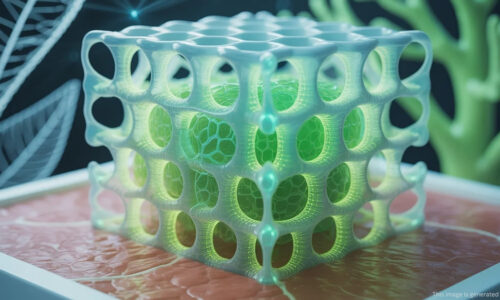
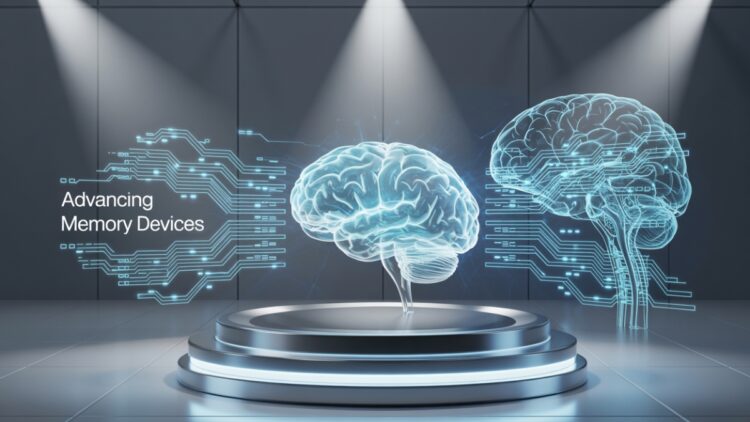


In an era defined by rapid technological progress and the ever-growing ambitions of artificial intelligence (AI), researchers worldwide are striving to replicate the remarkable functionalism of the human brain. The limitations of traditional Von Neumann computing architecture, characterized by the separation of memory and processing units, have become increasingly apparent in this quest. Neuromorphic computing, inspired by the human brain’s structure, seeks to overcome these limitations through devices that can store and process data simultaneously. Among such devices, memristors and other non-volatile resistors have gained significant attention due to their ability to mimic biological synapses, enabling memory storage without power consumption, rapid switching, and high data throughput. This paradigm shift is crucial as AI applications demand memory devices capable of neuromorphic transmission, fast switching, and seamless integration of storage and processing, traits that are inherent to the human brain. Unlike other non-volatile memories like Ferroelectric RAM (FeRAM), Magneto-resistive RAM (MRAM), and Phase-change RAM (PRAM), Resistive RAM (RRAM) offers a unique blend of scalability, cost-effectiveness, endurance, and swift switching, positioning itself as a cornerstone in the future of memory technologies.
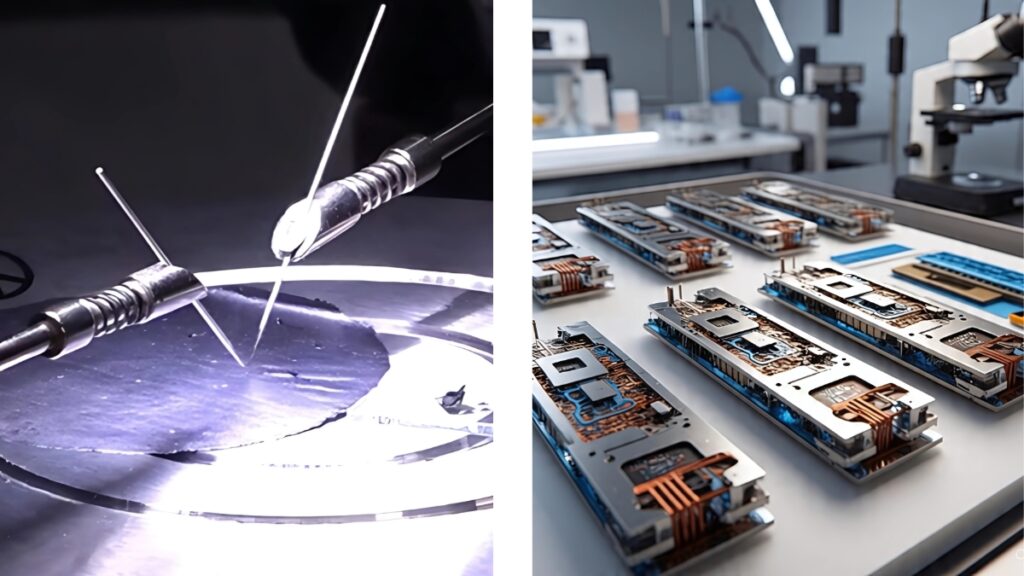
As the demand for miniaturized, flexible, and efficient memory devices surges, conventional materials like silicon struggle to keep up due to issues like variability in resistance switching, high costs, and poor performance in flexible and wearable applications. This has directed researchers focus toward two-dimensional (2D) materials, particularly MXenes, which exhibit tunable band gaps, rich surface chemistries, and exceptional mechanical properties. The flexible, substrate-free synthesis of MXenes not only reduces production costs but also enhances performance in wearable electronics. Double transition-metal MXenes (DTM), such as Mo₂Ti₂C₃Tₓ, represent a new frontier, offering superior electrical and mechanical attributes by combining different transition metals within a single structure. Their unexplored potential, especially in inducing ferroelectric properties via controlled heat treatments, opens up avenues for novel non-volatile memory applications. Additionally, materials like laser-scribed graphene (LSG) address long-standing challenges like leakage currents and ion diffusion in traditional metal electrodes, making them valuable allies in next-generation memory devices.
In response to the pressing need for advanced synaptic memory devices, our research marks a significant leap forward. We successfully synthesized and fabricated a flexible, substrate-free memristor device utilizing Mo₂Ti₂C₃Tₓ MXene, representing the first report of a ferroelectric response in this material. This breakthrough was achieved by heating the delaminated MXene film at 400°C, which led to the formation of oxide phases (rutile TiO₂ and MoO₃) while preserving the MXene structure. This transformation unlocked ferroelectric behavior previously absent in the pristine material, significantly enhancing memory characteristics like resistance switching repeatability, endurance, and retention. Our tri-layer device, constructed with laser-scribed graphene electrodes sandwiching the heated MXene layer, demonstrated robust neuromorphic properties with an ROFF/RON ratio of 10², endurance of 10³ cycles, and data retention exceeding 5,000 seconds. The entire synthesis and fabrication process, from chemical etching to the precise assembly of the tri-layer structure, was designed in ambient lab environment for scalability, cost efficiency, and compatibility with flexible electronics. This invention not only bridges a critical gap in memory device research but also paves the way for practical applications in AI, wearable tech, and flexible computing.
Our novel MXene-based memory device offers tangible advantages: lab-scale proof of concept, cost-effective and scalable fabrication, enhanced data storage reliability, high endurance, and flexibility suitable for next-generation electronics. As AI-driven technologies and machine learning systems advance, the demand for such neuromorphic devices will only intensify. Looking ahead, further exploration of double transition-metal MXenes, integration with ferroelectric and other functional 2D materials, and the development of hybrid memory architectures could revolutionize data storage and processing. We invite collaboration with academic researchers, industrial partners, and technology innovators to co-develop flexible memory technologies under clean-room environment for enhanced device performance, and explore their integration into real-world AI applications, IoT systems, and wearable electronics. Let’s join forces to push the boundaries of what’s possible in memory technology whether through material science, device engineering, or system-level integration. Together, we can create the building blocks of future computing systems that rival the human brain in efficiency and capability.
Video Demonstration
Original Research Paper
Kubra Sattar, Rabia Tahir, S. Afsheen Zahra, Z. Nie, J. Wang, H. Huang, Syed Rizwan*, Carbon, 237 (2025) 120149 (DOI: https://doi.org/10.1016/j.carbon.2025.120149).
The author is a Professor at School of Natural Sciences (SNS), National University of Sciences and Technology (NUST). He can be reached at [email protected].
Research Profile: https://bit.ly/4lb0hO0